Premired “I was There to be Here” in MN Dance community

Archiving, Choreography, Life logging, Performance

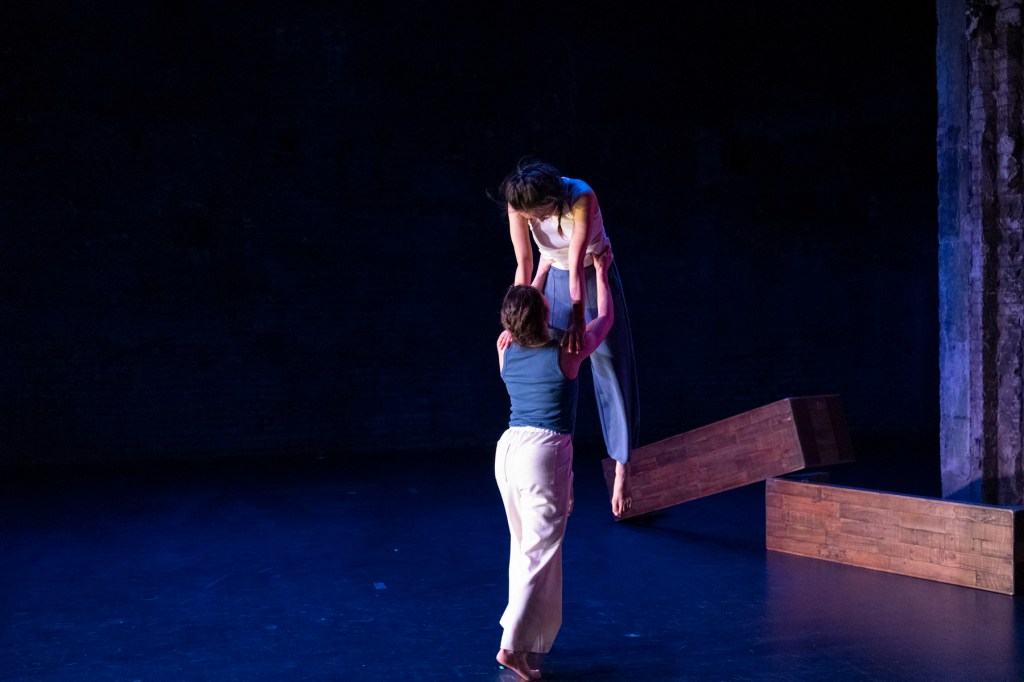
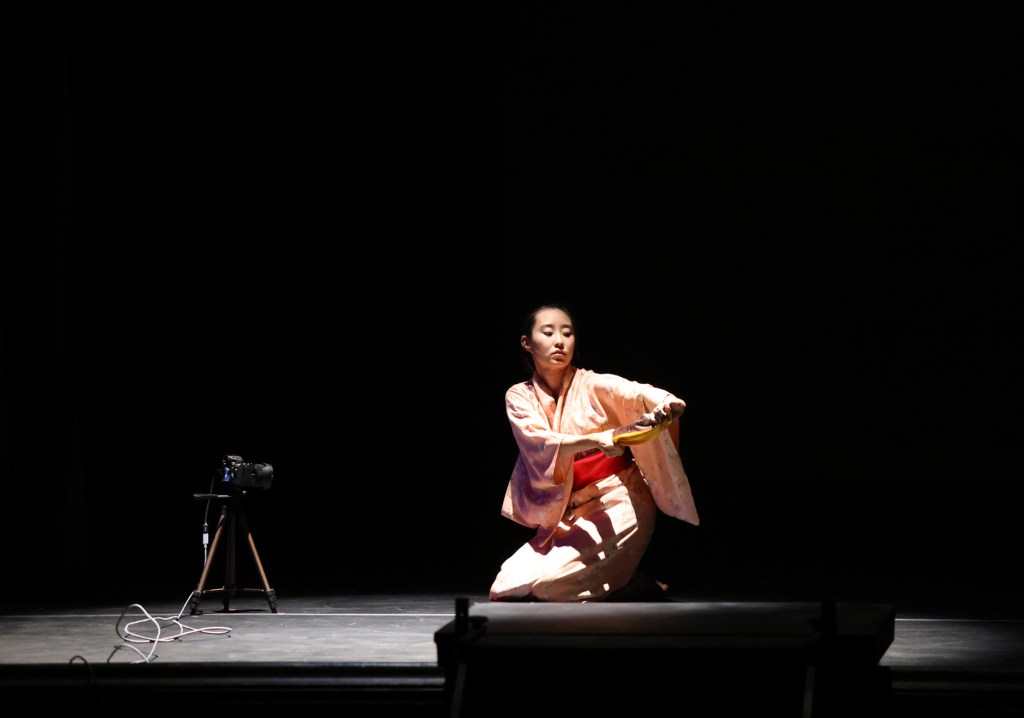
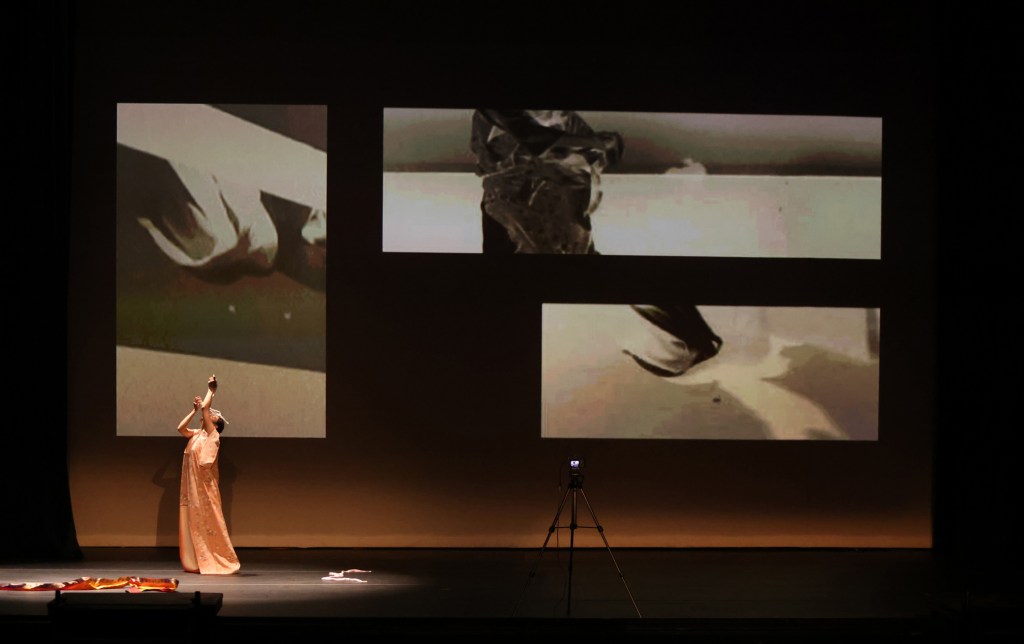
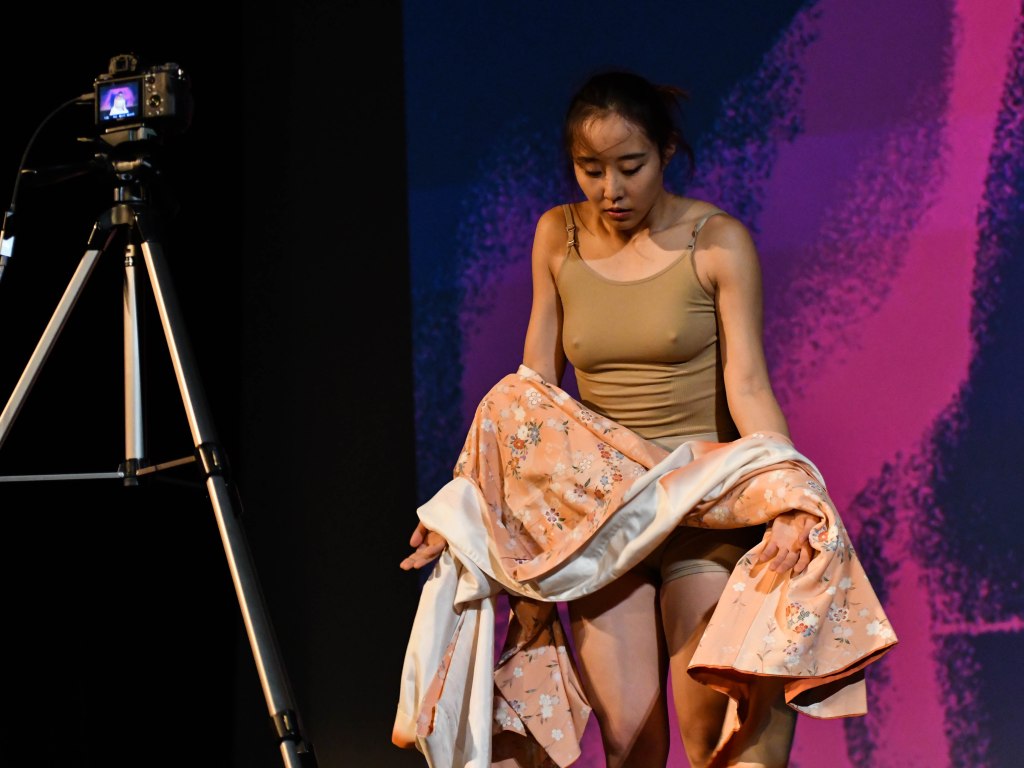
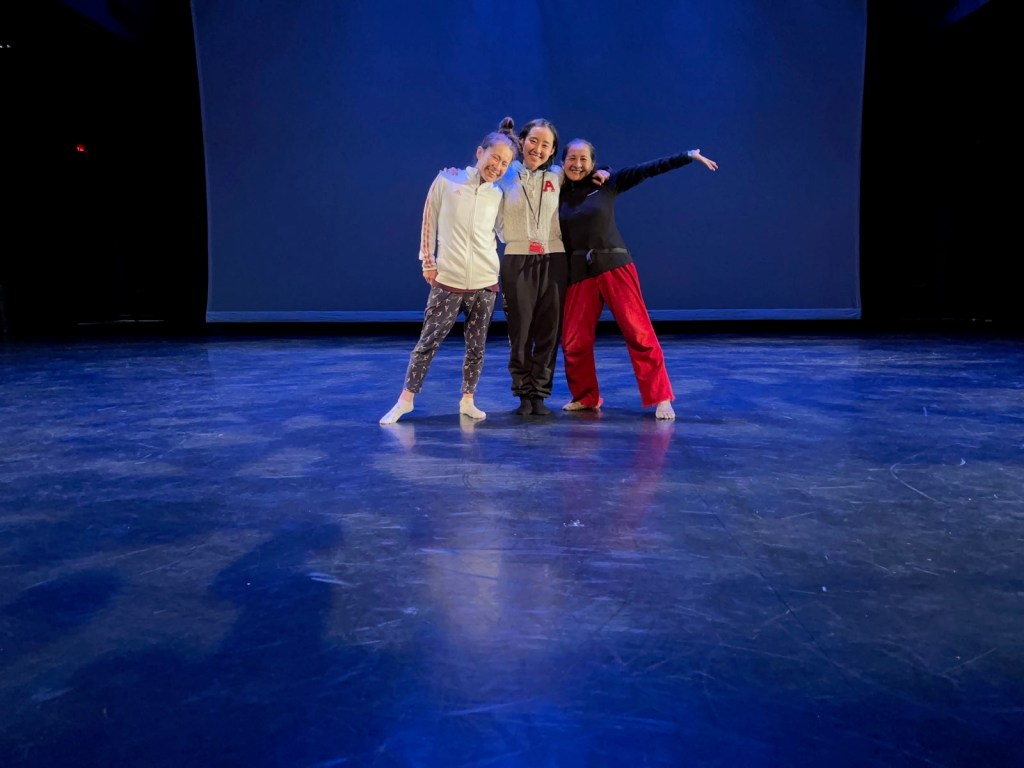
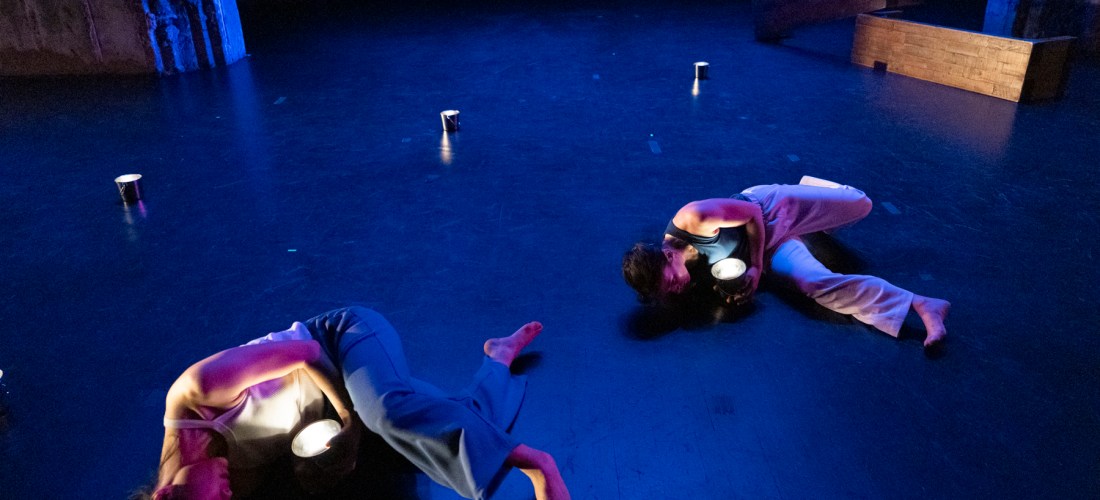
In April 2025, I was fortunate to be selected to present my work as part of the Candy Box Dance Festival at the Southern Theater.

I Was There to Be Here reflects on the passage of time since leaving our hometowns and the ongoing search for “home.” Drawing from all the places I’ve called “home,” from Tokyo to Minneapolis, I explore how memory shapes identity. It’s a moving dialogue between my past self and present self, weaving belonging into the body I inhabit today.
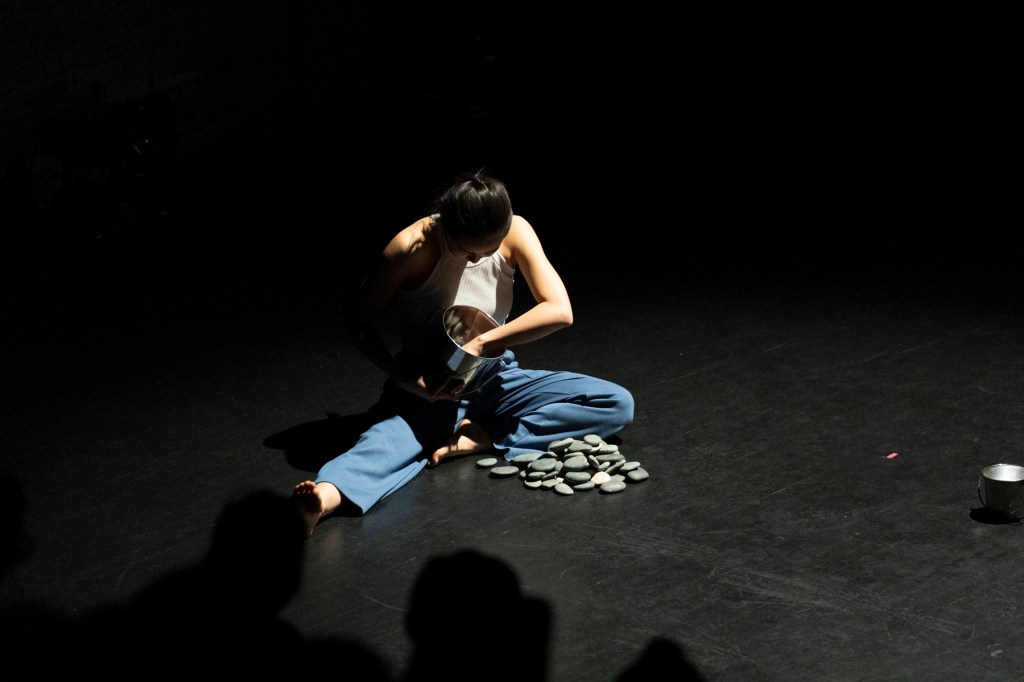
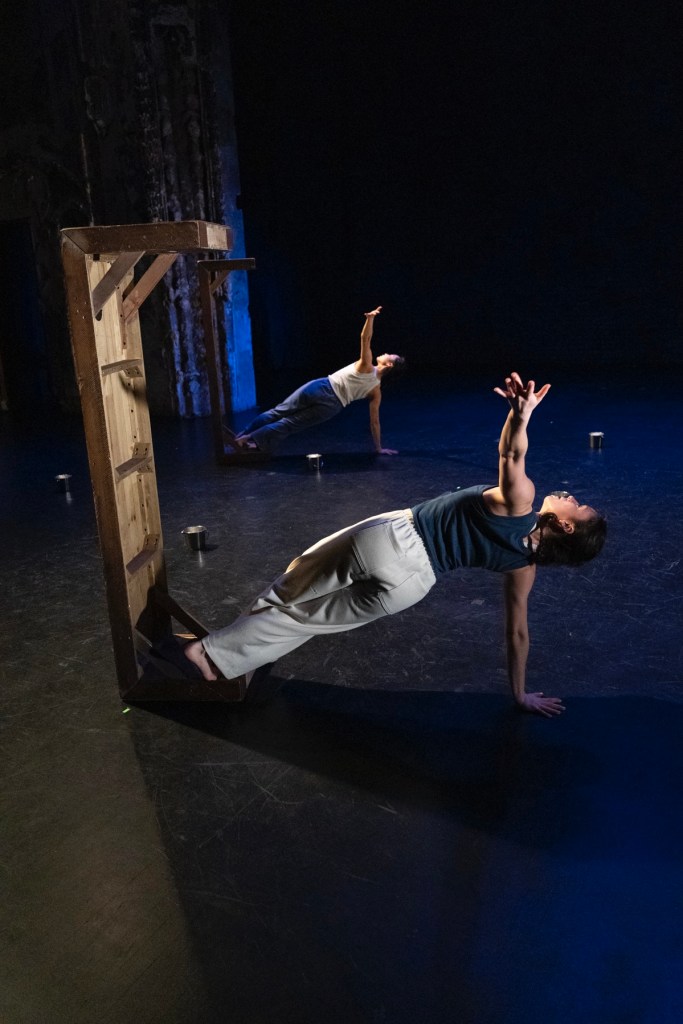
The piece was inspired by my experience returning home in 2023—the first time since COVID-19 began. The hometown I once lived in, and even the language I used to speak every day, suddenly felt foreign. That moment of estrangement made me think deeply about the passage of time. I revisited childhood photographs and the physical habits shaped by each place I’ve lived. These memories surfaced as textures in the movement—small gestures, fragments of soundscape, postural tendencies, and rhythms I had unconsciously carried with me. The process became an excavation of how the body archives time, revealing what I’ve held onto and what I’ve outgrown.

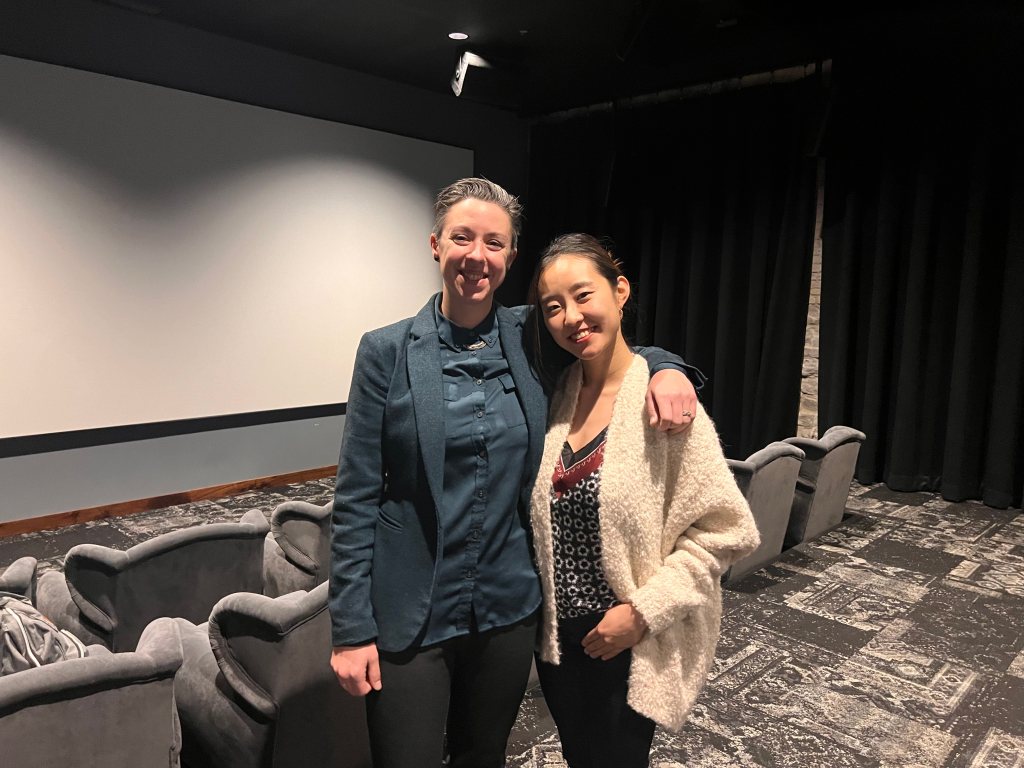
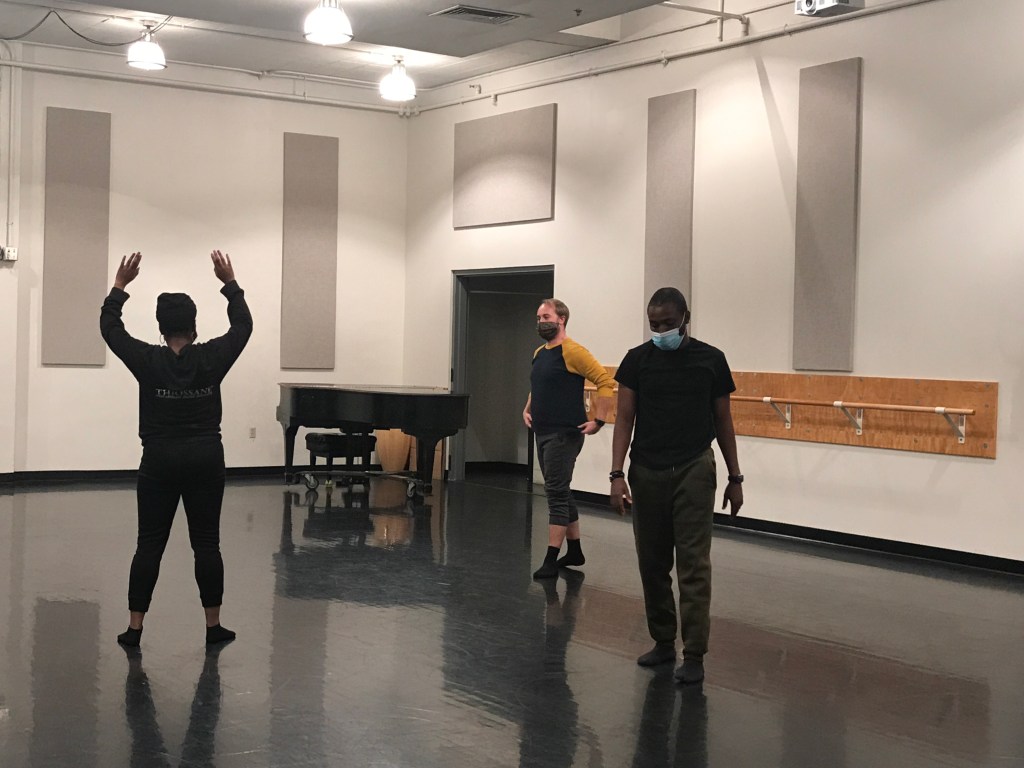
In the rehearsal process, my duet partner, Rachel Holmes, and I spent time discussing memories, our relationships with the past, and how those histories mirror who we are in the present. We talked about how time grows out of the past while continually shifting and moving forward. We brought various props into the studio to visualize imagined conversations between our present and past selves. The two benches became a door, a bridge, and a landmark of life. The piles of rocks and eight buckets with internal lights represented the emotional temperature and texture of different memories. We treated the studio as a site of remembering, and these practices allowed us to build a movement language that felt intimate, porous, and always in conversation with change.

Presenting I Was There to Be Here within Candy Box gave me space to explore the concept more fully and allowed the piece to keep evolving. This felt true to the theme of “home” as something fluid rather than fixed. I was surprised by how many people had different interpretations of our relationship—seeing Rachel and me as friends, sisters, or reflections of one another—and yet how many resonated with the larger journey of seeking. I realized the work was not only about my own story but also about the universal feeling of being shaped by the places and people we move through.

This project is part of my ongoing investigation into cultural hybridity and the body as a living archive. I Was There to Be Here continues to push me to ask deeper questions about how we carry history, displacement, and belonging within our bones, and how movement can reveal what words cannot.
End of October – Cabaret production reflection

Choreography, Life logging, Theater

The leaves have colored bright red and oranges and started falling off from the tree. It signifies the year has been 3/4 down and two months left of 2024. It seems like yesterday was just a hot summer day and now I feel a little cold wind that passes my face. Time flies so fast.
I wanted to write down my experience in working with theater production for the first time in my life! Strangely, my undergraduate program was very connected with Musical theater majors, but I never dreamt of being on the Broadway stage. I do love singing and dancing. Yet I have never had an idea of me standing on the theatre stage. Therefore, I never thought I would be involved in Theater production.

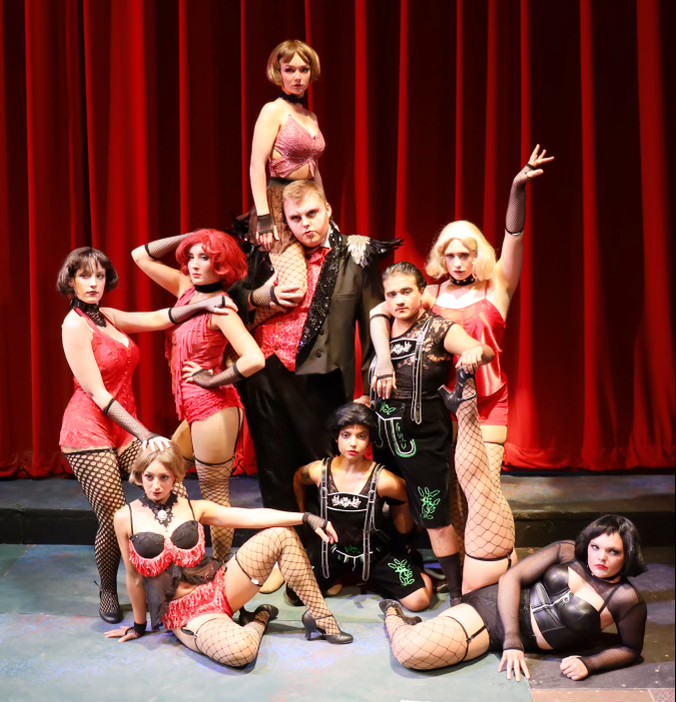
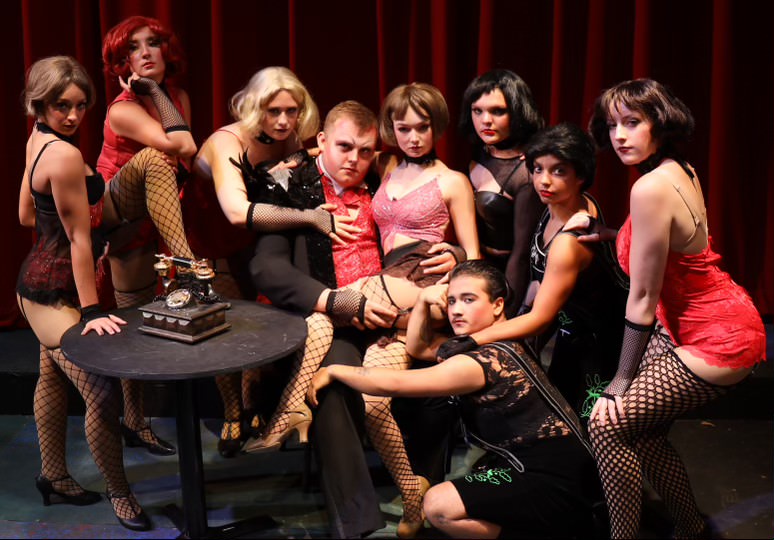
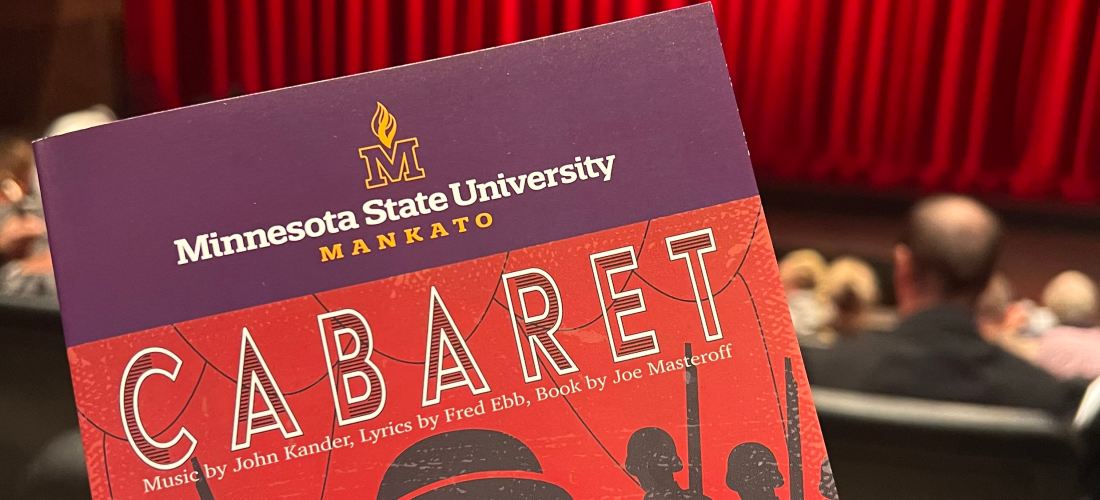
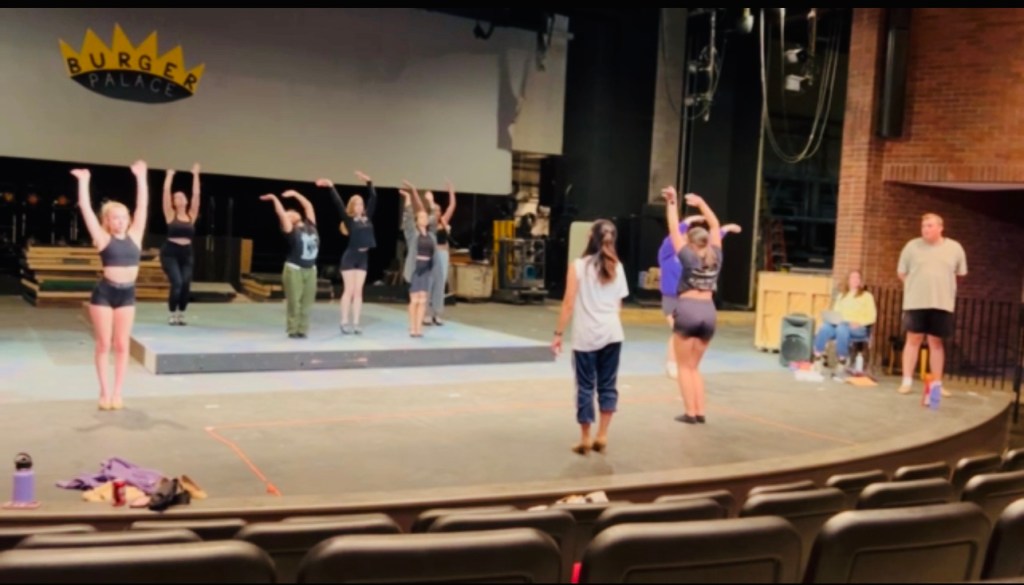
During the couple past of weeks of August and September, I had a wonderful opportunity to choreograph the musical production, Cabaret. I knew the production because I have danced to some of Bob Fosse’s repertoire and I performed in “Mein Herr” as an excerpt dance number. The story is centered around Kit Kat club singer, Sally Bowles and a young enthusiastic writer Clifford in Berlin during the 1930s. It depicts the arousal of political tensions and racial problems and showcases the complex sexual orientations and gender roles, questions what life is … to sum it up, Cabaret is not a happy story.

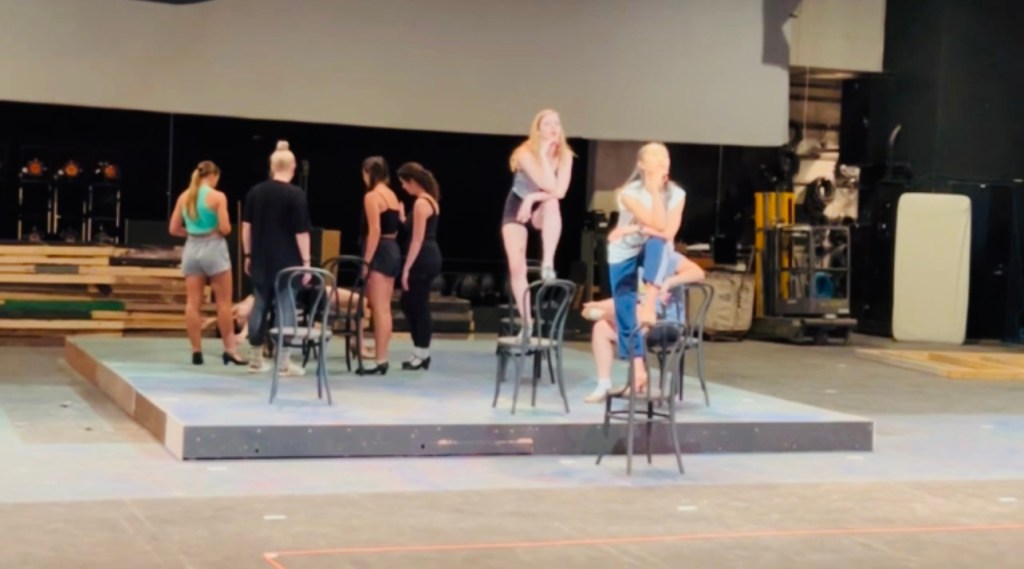
As a choreographer, I researched many documentation of previous Cabaret productions, watched the film that Bob Fosse directed, and went to Berlin to see Cabaret production to fully understand what this production is about. At first, I was terrified. I pondered what would required for students to perform as club dancers safely. How do I prioritize the comfortability of some sexual expression while creating safety in dancers’ bodies? Some dance numbers were very challenging, dealing with race, sex, and politics.

In my rehearsal, I always started checking in with the dancers’ bodies. We circled up and asked how they felt today, and where in their body they felt okay or not good to be seen and touched. They scanned from head to toe, gesturing “yes” or “no” to everyone in the circle so that we all know. I also asked dancers to consent every time if some choreographic choices have some sexual expressions. It helped them feel secure and allowed them to speak up about their choices and comfort.

Another pressure was time constraints. I had only six days of three hours of rehearsal to finish seven dance numbers! The very little amount of time to teach the choreography and ready to set them on stage was a drastic difference from how I choreograph dance works or films. Thankfully I had a great dance captain who could clean and polish after these intense 6 days of setting the choreography. Transitioning from the dance studio to the actual stage was also another beast. Not only working with the limitation of the size of the stage but also entering, and exiting with stairs or dancing on the different levels were challenging. I asked dancers to trust their artistic choices on the stage and fully immerse in their characters. The performance is the art of being therefore whatever they do I leave the choices up to the dancers.

Photo by Corrie Eggimann

Overall, it was fruitful to see my contribution to the production plus witnessing choreography and dancers’ performances enhance the shows. The cast of Cabret was full of talented actors and I really admired their dedication to the performance. The show ran for two weeks from October 3rd to October 13th. There is always something I can learn new things every semester I am teaching at MNSU. In the future, I hope to integrate my learning and teaching in different disciplines in the performing arts.

Sun arose for the 28th cycle

Dance film, Life logging, Performance

This month, I entered the 28th cycle of the sun. The year of 27th, I had a drastic change in my life. I encountered a new environment, people, responsibilities, and opportunities. It’s almost like the universe shifted underneath where I was standing. In the unknown current of the ocean, I was trying to find the calm wave to put myself together.

Entering 2024, There were many fresh experiences. I was fortunate to find the support and exciting opportunities. Started to feel the tide and let it flow inside of me.

In January, I performed my solo, “The Discipline Body” at Red Eye Theater in Minneapolis. I was a part of the work-in-progress sharing called “Tiger Balm.” This was my first time sharing my work in the Minnesota dance community, which was super exciting! “The Discipline Body” examines how one’s culture shapes the body to regulate one’s behavior in public space. It is inspired by the Japanese educational system that teaches students to behave “appropriately.” This performance was an autobiographic reflection of unfolding the embodiment of the education system through my body. The great thing about the showing was the feedback session. I was able to hear from the audience their sensations and questions that arose from viewing.

This is the video recording from Tiger Balms (work-in-progress sharing) at Red Eye Theater, Minneapolis MN.

Another experience I valued was participating in the ACDA (American College Dance Alliance) in the North Central region. This year was held in St.Olf College. I taught Introduction to Dance Film, which introduces students to dance-making from different angles and viewpoints by using the camera. Instant composition was a fruitful experience to see students’ creativity and playfulness. Also, I brought my dance piece from the Fall Faculty Concert, “Can I See You on the Other Side.” Calling the lighting cue and watching my choreography from the lighting booth was a new experience for me. Overall, it was a great opportunity to introduce myself to the regional institutions, and seeing students learning, performing, and connecting with the dance community was a treat to me as a dance educator.

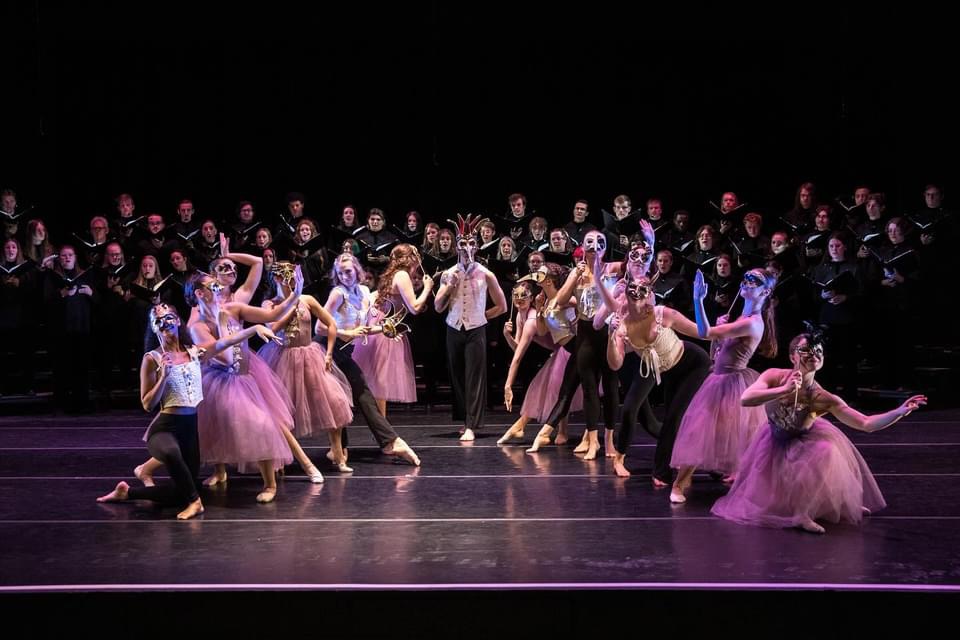
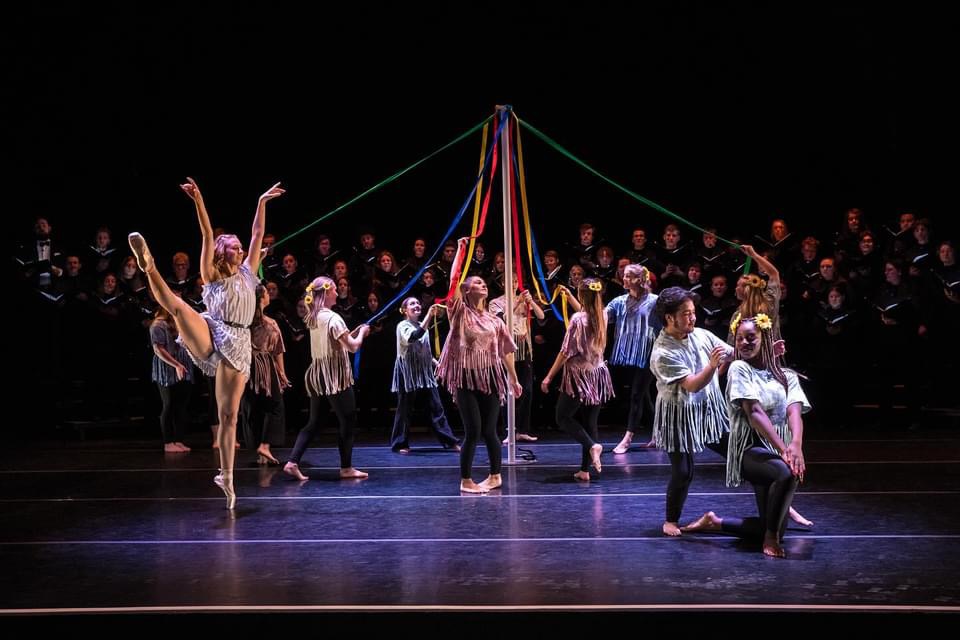
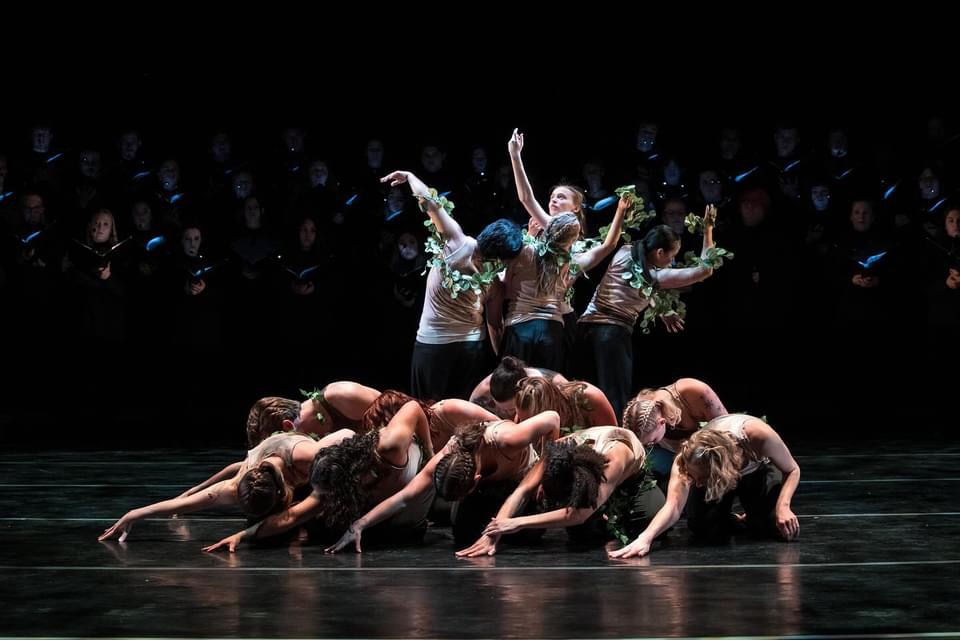
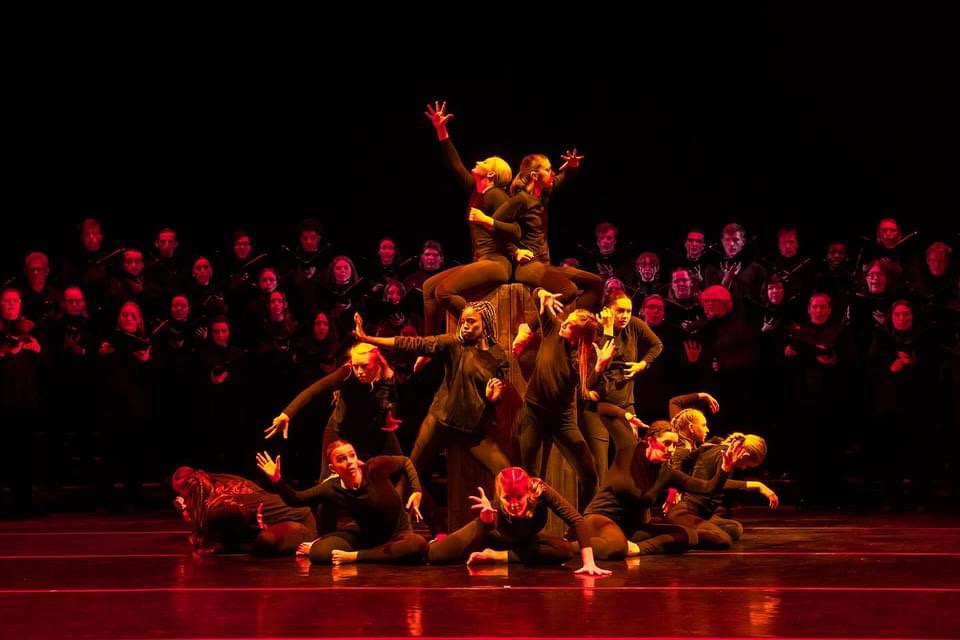
Concluding the academic year of 2023-2024, we had “Carmina Burana” to celebrate the new departure as the Performing Arts Department of Minnesota State University Mankato. “Carmina Burana” is composed by Carl Orff, inspired by Latin songs of the circle of life. We fused live dance, chorus, and orchestra. I participated in this huge production as a choreographer. Embodying the strong introduction of this opera was very exciting and scary at the same time. I normally don’t work with classical music, so generating the materials was based on the theme and story of the opera, which was a fun experience to collaborate with my talented students. Also, composing the movement ideas into the big casts was a good challenge for me. I had 19 casts in one section, and moving the stage with that amount of movers was spectacular. It was quite an experience to work with live musicians and singers as well as theater technicians to put on this production. I am looking forward to having more collaboration beyond the disciplines in the future.

Photo: Dan Norman

Without the huge wave hitting at me, I am centering myself during the summer. More fresh experiences to come in the future. To prepare for the new wave, I am practicing letting go of judgment, expectations, and assumptions, and starting the conversation with open-ended questions. How to allow myself to be always open and available to the world? This is a difficult task, but I would like to practice every day. I am welcoming the new circle of life.

Hoping everyone has a toasty and juicy July:)

That’s a wrap! The year of change, 2023

Dance film, Life logging, Performance

It’s already at the end the end of the year 2023. What a year of CHANGE! Since graduation, my life has hugely shifted. I felt like I almost lived two lives in a year, the first half as a graduate student and the other half as a dance faculty.

After I graduated from Ohio State University in May, I moved to Mankato, Minnesota, where I started as an assistant professor in Dance at the Department of Performing Arts. Learning new theater and dance department ecosystem, adjusting the new school schedule as a faculty, adopting the cold Minnesota weather… All happened in less than five months. It was a huge learning curve to be an instructor of college-level movement courses with various students, not only dance major students but also Theater students and dance minor students with different movement backgrounds. I aim to offer a class where students can feel safe to be curious, explore, and deeply listen to their bodies and internal desire to dance. Ultimately, I want my students to look forward to taking classes. I wanted to write it down here to remind myself of the future -Where I started and what dance educator I want to strive to become.

Photos from the Fall Dance Concert 2023

I also would like to mention some of the choreographic projects I participated in this year. I was honored to be chosen as a dance artist to perform outside of the school system. Yujie Chen and I performed “Motion of Seeing” at the Detroit Dance City Festival in September. This piece we created was the second iteration of “Body Negative” and it expanded the idea of mobility in seeing the performance. I also deepened my choreography to think about how BIPOC artists deal with cultural representation. We received the National Exchange Award. Even though I am still in search of my artistic voice, such rewarding to share and recognize dance works that My collaborator and I put the effort into.

Photos from the performance, “Motion of Seeing” at the Detroit Dance City Festival

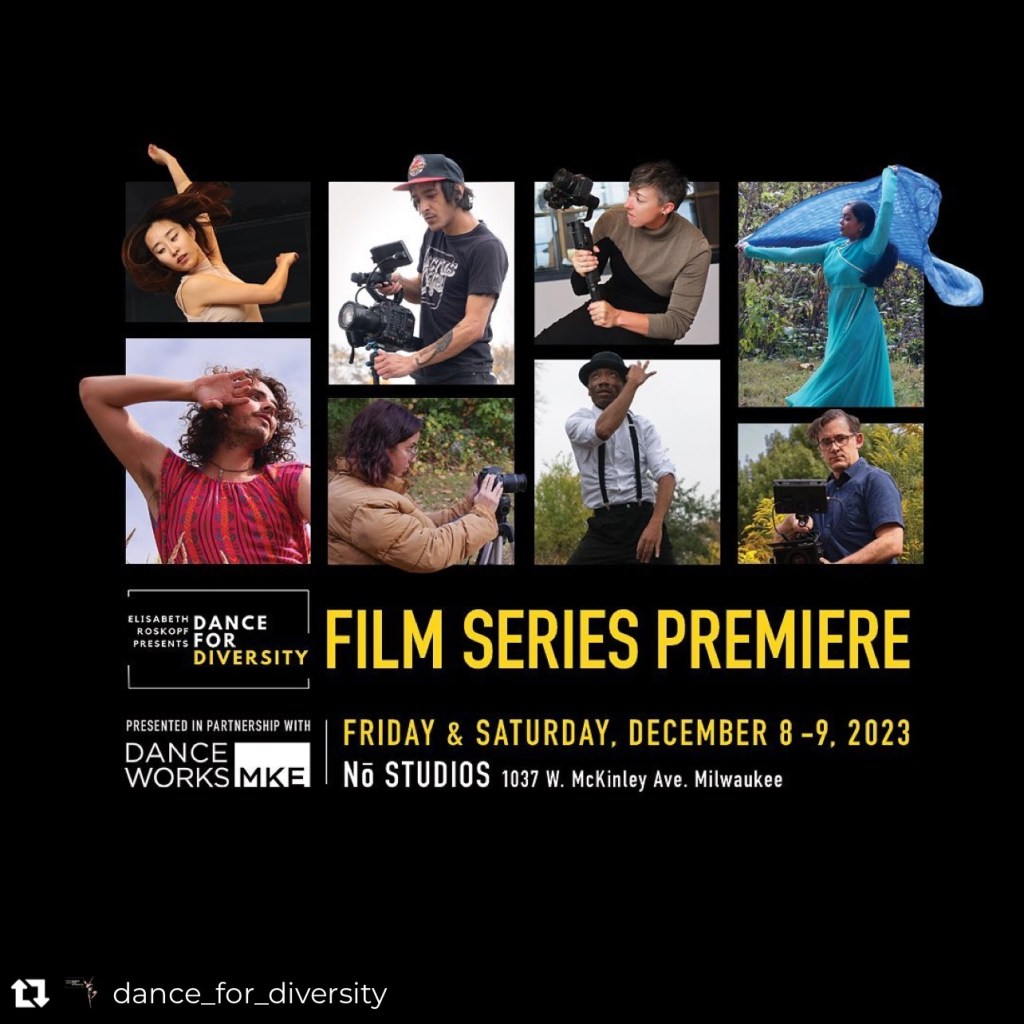
Another chance that I could explore my artistry was through dance filmmaking. I was fortunate to be part of the project, Dance for Diversity. Dance for Diversity was founded by Elizabeth Roskph and envisioned to amplify visibility and create a platform for BIPOC Artists to center their unique voices and their stories through their art while fostering a place of belonging and reclamation of their true identities. I had the privilege to collaborate with the videographer, Rachel Malhorn. I had an idea of visualizing in-betweenness that I experienced as a first-generation immigrant. I wanted to showcase the acknowledging upbringing and how we adopted, changed, and merged our living experiences in different cultures to live in the U.S. For 4 months, we had great communication back and forth to discuss creative direction. We filmed all the materials in Milwaukee WI in 2 days and assembled the film. The level of understanding and trust made us create a dance film, 藍 (Ai).

Photos from Dance for Diversity, at the Film Series Premiere

I want to conclude this post with appreciation and hope. The job and many choreographic projects that I participated in were extensions of what have learned and inserted in working with during my graduate time. This year gave me confidence and autonomy in what I want to do. I hope to expand and grow more in 2024.

Space Making Workshop 11/18

Research Project

At the beginning of 2022, I started to reach out to many Japanese female dance artists in the United States. Because, over these 7 years of staying in the U.S., I realized how important to understand my upbringing in terms of refining a relationship with my cultural identity and dance-making. Therefore, I looked for someone who shares a similar background as me and is able to tell the struggles and success stories with me.

When I came to the undergraduate program in Oklahoma, I was the only international student, Asian student in the department. I was super visible and aware of my skin, body, and how I move. Regardless of the visibility of my ethnicity, I had never met anybody who immigrated from Japan and pursued a career as a dance maker. I also started to figure out that I have the ability to sense and understand the choreographer’s mind. For me, dancing to someone’s choreography is some kind of translation and also a transformation of myself to be their voice. On the other hand, dance-making is embodying my own creative voice. It was more difficult to process than translation. I felt I needed some assistance in understanding what is my creative voice, and how to polish it.

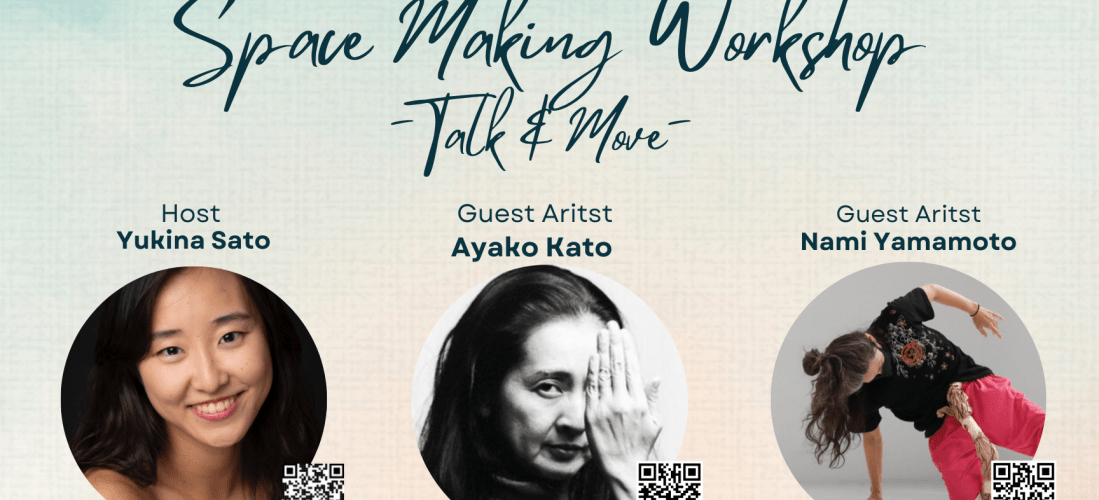
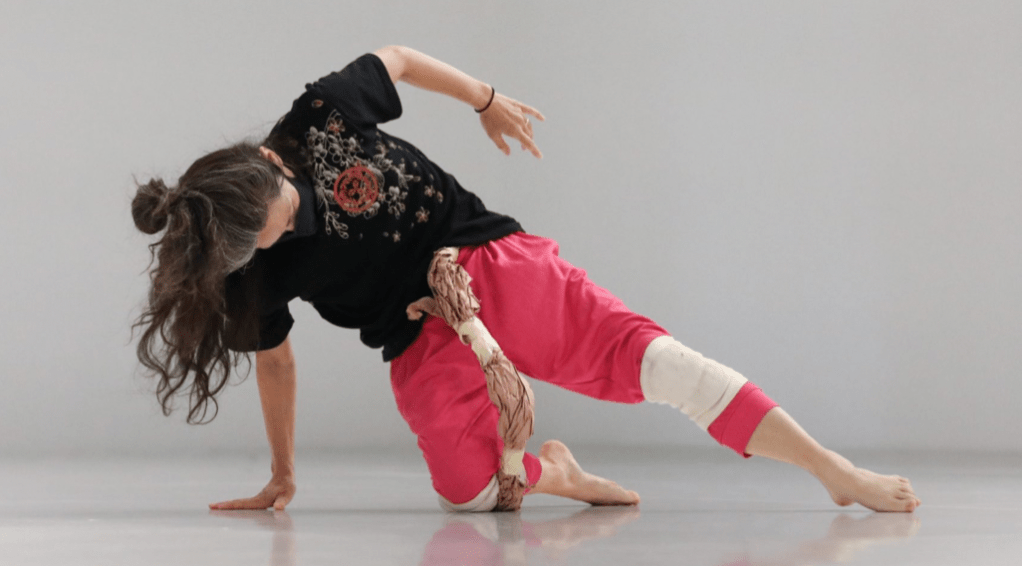
The generous artists named, Ayako Kato (Chicago IL) and Nami Yamamoto (NYC, NY) are willing to share the stories of their careers in dance-making in the United States. They are born and raised in Japan, and at some point in their life, they came to the U.S. and decided to stay here in the U.S. to pursue dance-making. Their decision itself is super brave to me but also they have been actively making work. Nami is awarded by Bessie Award in 2017 for her work, “Headless wolf” and Ayako just completed her performance series Ethos started in October 2022.

Photo: Nami Yamamoto (Left) and Ayako Kato (Right)

I communicated with them over 5 months about the idea of hosting a workshop to connect us as well as share their story in a public space. We named as “Space Making Workshop” to invite people to experience Nami and Ayako’s dance practice and have a conversation with them.

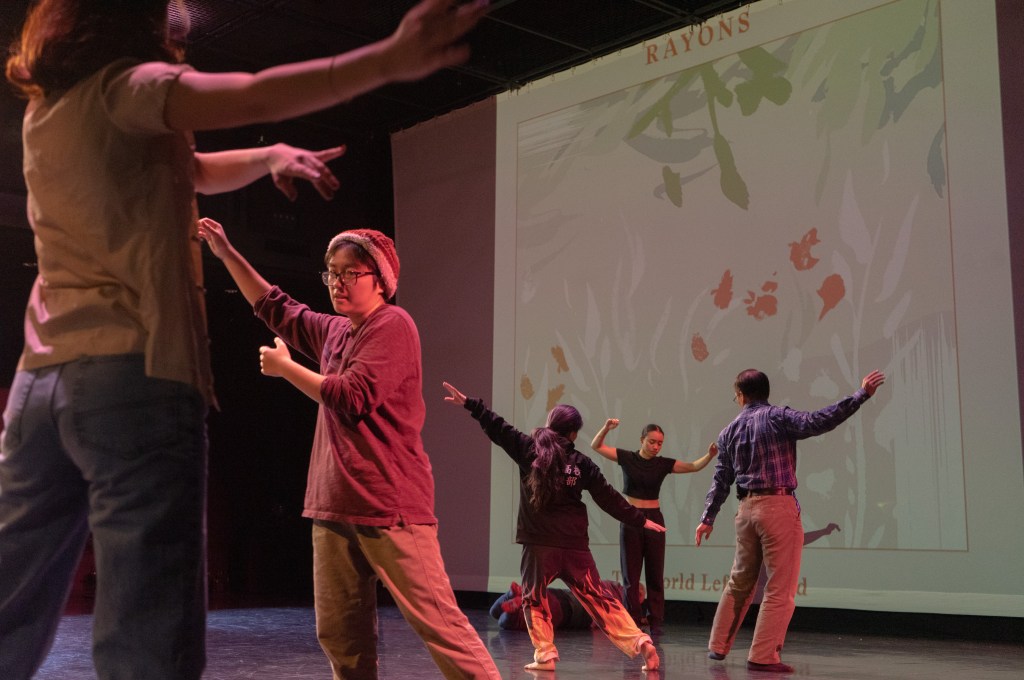
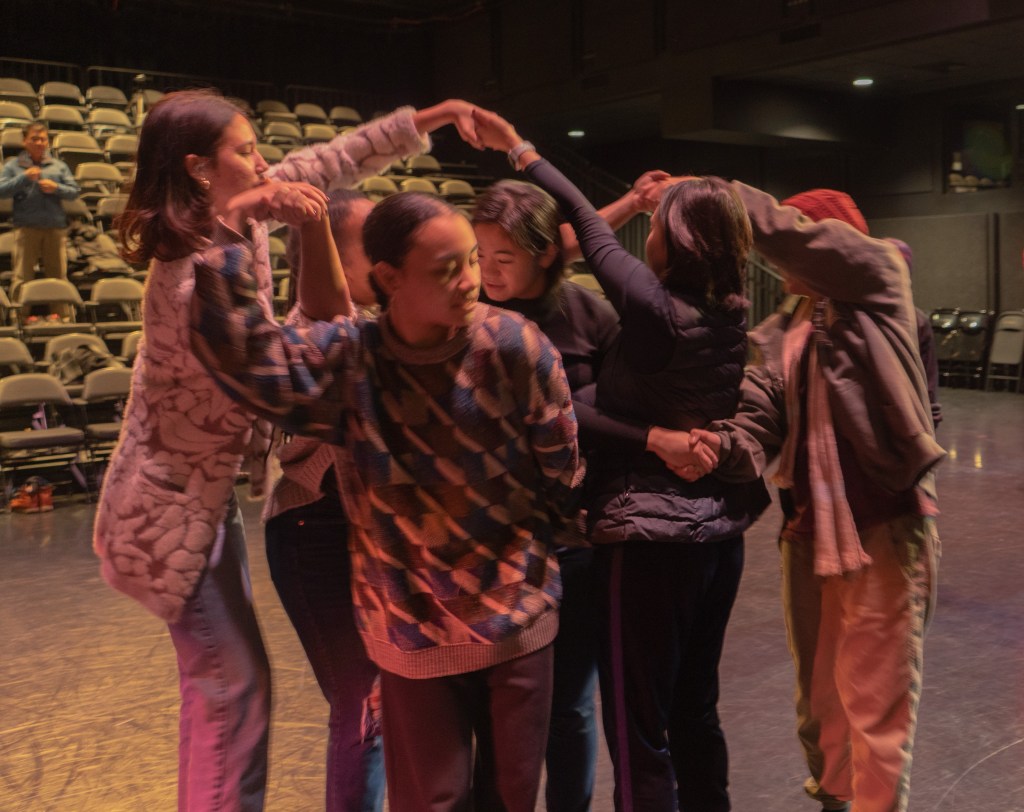
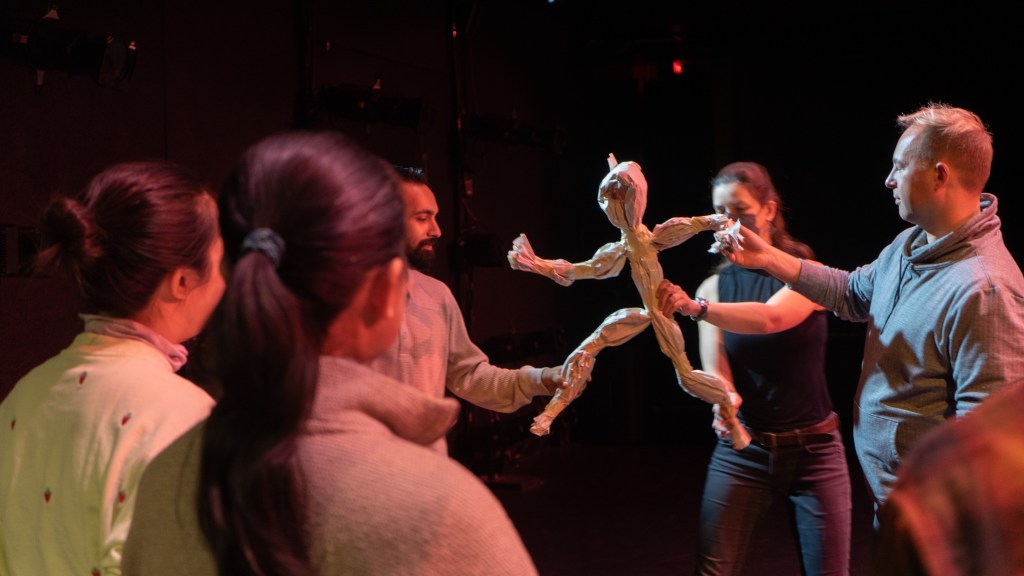
I organized the “Space Making Workshop” in November 2022 at the Ohio State University. Both artists traveled to Columbus for the first time on November 17th. The workshop was at the Barnett Theater from 3 to 5 PM. Nami started to make us move. She brings us to a circle and shifts weight from one leg to the other. Looking at each other, sensing each other’s weight. Naturally, we were smiling at each other. Nami incorporates puppetry in her work. She and I made the puppet on the site, and we offer participants to try puppetry. In Japanese puppetry, Bunraku is usually three puppeteer move one puppet. It’s coordination, communication, and storytelling. Next, following Ayako telling Japanese philosophy, Furyu (Wind and flow). Back to the circle, opened both arms, and breathe together. Found a partner and slowly improvised with music. 

After all the movement sessions, we formed the circle at the Barnett Theater. I asked them prior to the workshop, What events/What things/who did shape them. It was so interesting to hear about their upbringing; what was important and affected them being who they are. As I write above, I felt my cultural identity always come forward more than myself. I was always grappling with authenticity and cultural representation. What does it mean to be an “Asian”, “East Asian”, or “Japanese” woman? I was curious to hear about their journey to think about the intersection between cultural identity and dance-making. Ayako is externally expressive about her choreographic inspiration which is based on the Japanese philosophy, Furyu while Nami doesn’t mention “Japanese culture” in her work. However, the way Nami communicated with dancers and how she utilized the space between dancers and movement phrases are informed by her college time in Ehime, Japan. No matter how much explicit their Japanese upbringing, both said “I am proudly being a Japanese woman making a dance work in the United States.”

During these intense two days, I spent a wonderful time sharing my and their story of struggles and successes. Moved and shared the space. Even though we were born and raised in different times and places, this workshop made a space for us to gather here, in Columbus, Ohio. Currently, we were working on a solo collaboration that I am going to share at the MFA thesis project showing on February 16th-18th 2023. Each artist oversees my work and creates the solo together with me over zoom and in-person studio rehearsal. I am excited to share our work at the end of my journey in the MFA program at Ohio State University.

Stay tuned!

Performance information is here -> https://dance.osu.edu/events/mfa-concert-0

Being analog -Documentation in Film Photography-

Archiving, Life logging, Research Project

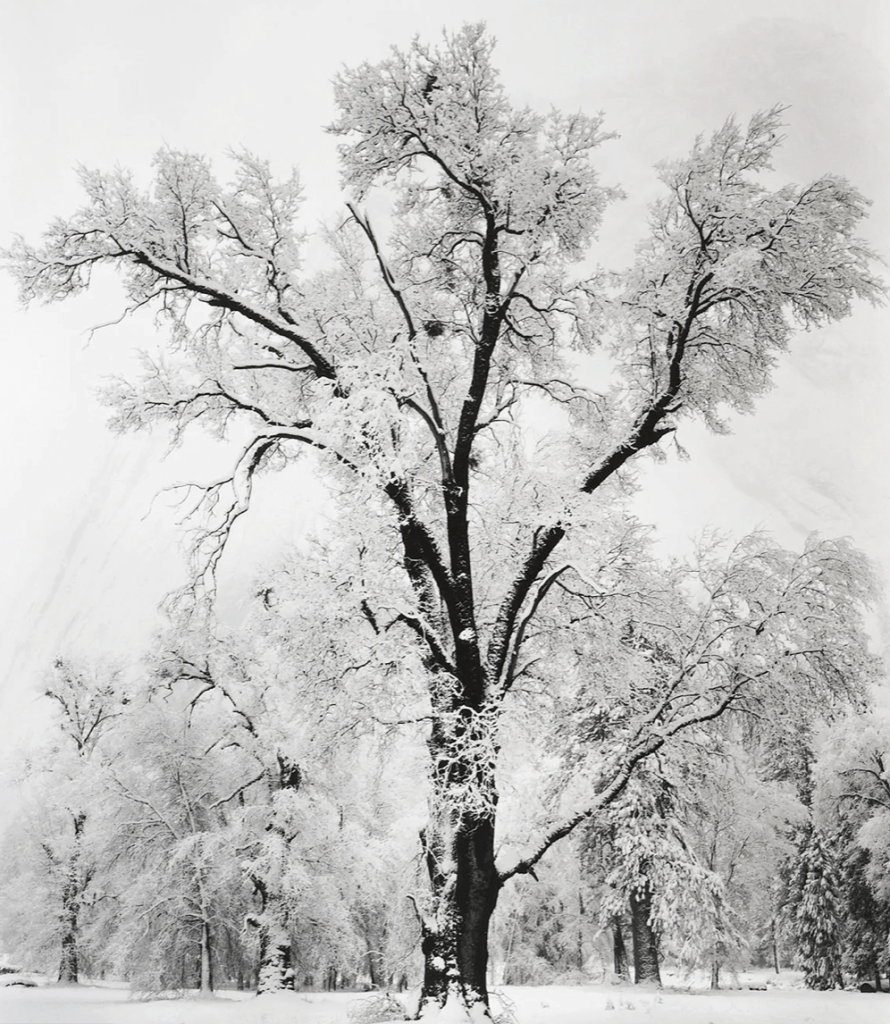
I am always fascinated by black and white photography. The simplicity of color yet provokes the imagination of what scenery looks and feels. I cannot deny my mother’s influence. In our living room, wherever we move to, she always hangs two black and white photographs on the wall. I am always fascinated by black and white photography. The simplicity of color yet provokes the imagination of what scenery looks and feels. I cannot deny my mother’s influence. In our living room, wherever we move to, she always hangs two black and white photographs on the wall. These photographs are taken by Ansel Adams. Very detailed, slow-shatter speed, high contrast photographs show the beauty of nature.

Oak Tree in Snow
Moonrise, Hernandez

In our world lives in, we prioritize speed. How quickly we can get to the goal, or achieve the results, find the fastest way to be successful… This semester, one of my favorite courses I am taking is the Darkroom photography course. The process of developing film photography in the darkroom teaches me how slow and delicate the process will assist in making the best result.

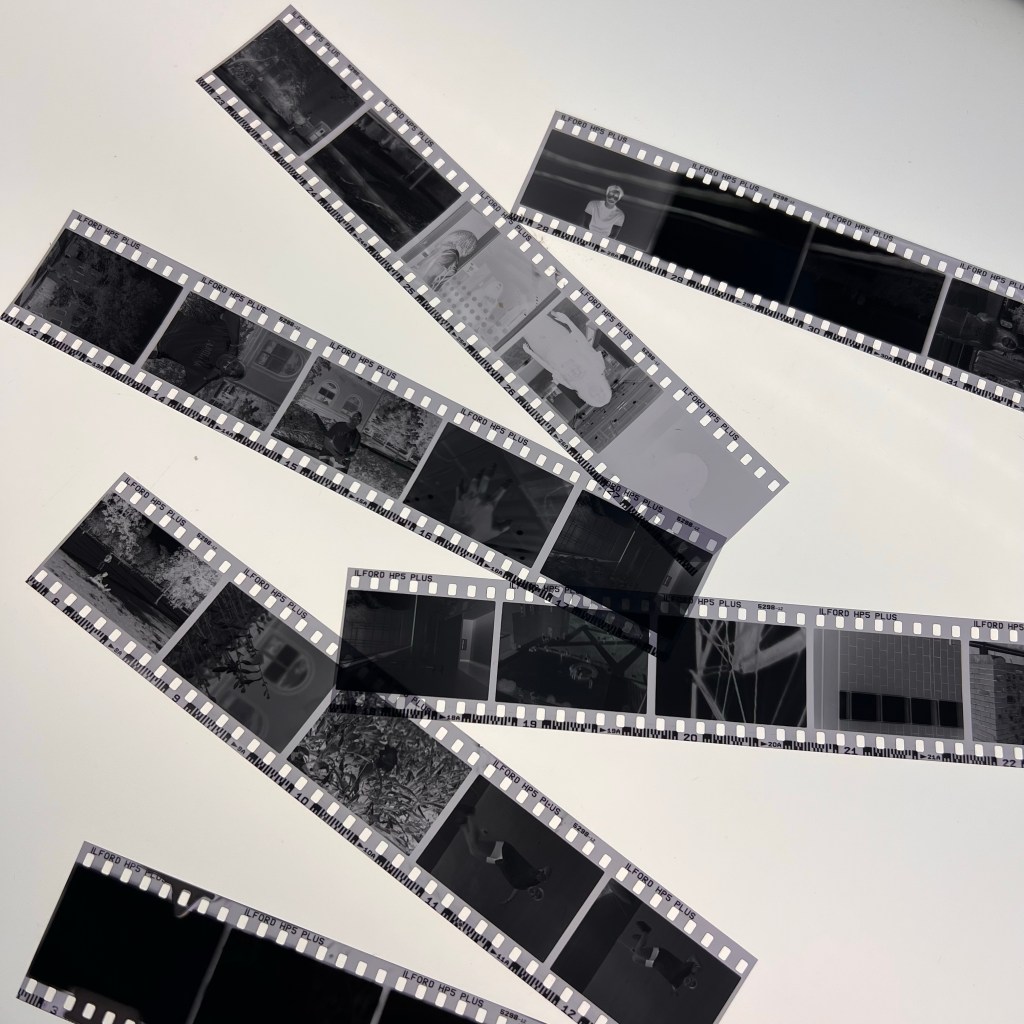
To see what you take in a film camera, start with developing the film roll to the negatives. Usually, the process takes 20-30 minutes. It required constant agitating with chemicals, almost like soothing the baby. The delicateness and slow porcess make a magic.
There is one time, when I tried to develop the negatives by class time, I rushed the process and destroyed them… If negatives don’t develop well, all data turned out all black and will not restore the image. Also, it is impossible to recreate the moment you snap a photo. It gives you not only the sallow but the sense of loss. Same as human memories. We forget and lose someone, something, or some events in our life if we do not imprint them in our brains or recall them. These memories will vanish in the dark.

Correctly developed negatives
My damaged negative… so sad

After finishing making negatives, it’s time to make the prints. In the darkroom, use an enlarger to light up one negative on a printing paper. It requires experimenting with the duration of exposure time to get the preferred tone of color. The longer exposure to the light, the darker the color gets. Similar to human skin.
After lighting up the negative on the paper, the print goes through 3 chemicals; developers, stop-bath, and fix. Sink it in each chemical tray for a couple of minutes with constant agitation. Finally, after all the processes, you are out of the darkroom and able to see the result.

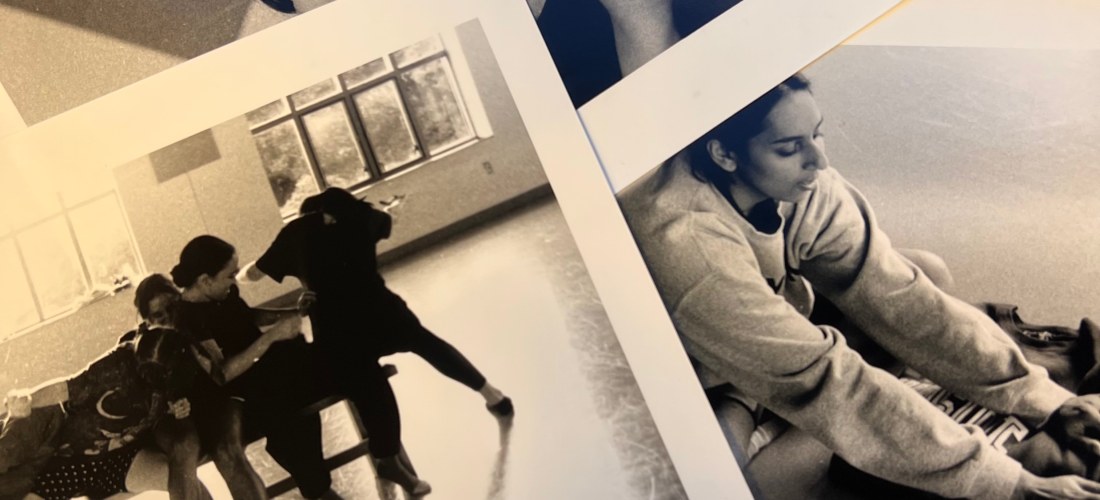
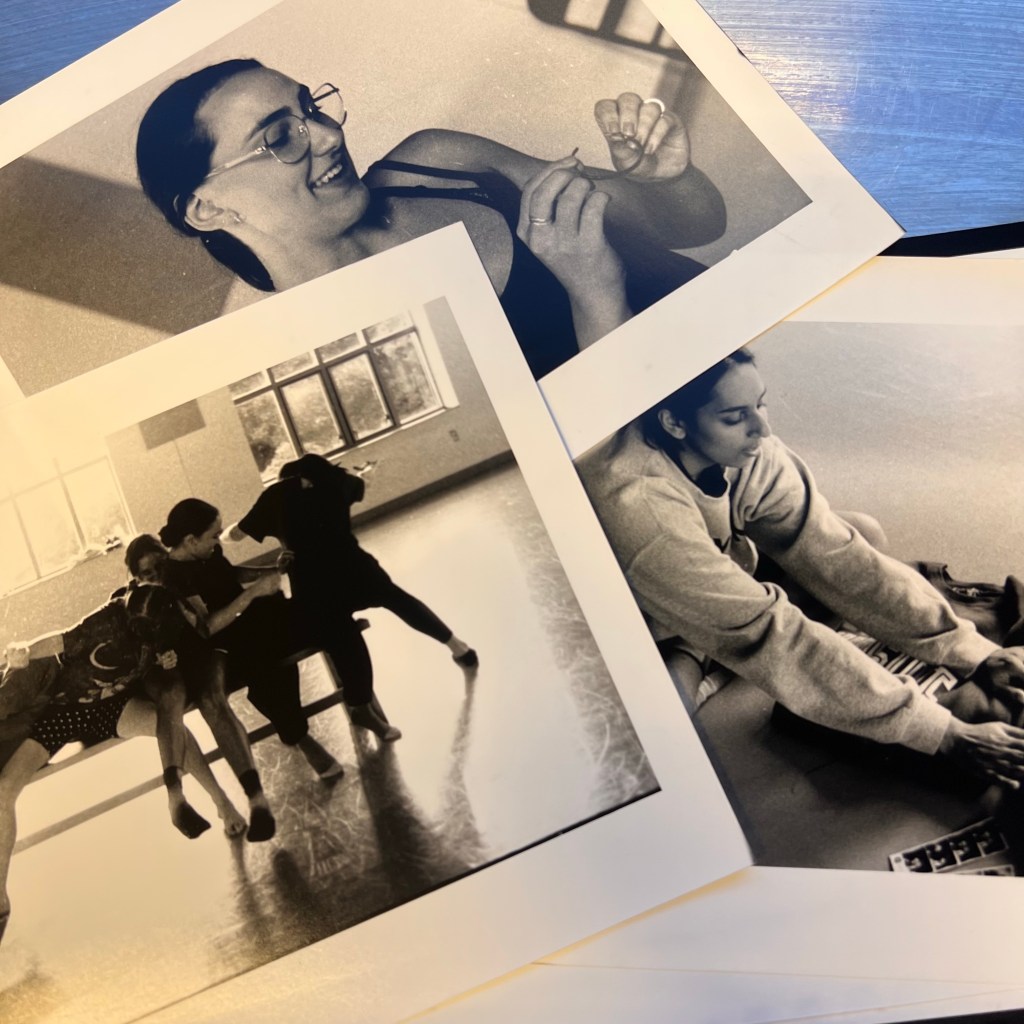
Rehearsal process on film photography

The pictures above are the moments from my rehearsal. I documented when dancers talked about their stories about their memorable objects. Looking at the prints, no matter how much movement inside the frame, they exist at the exact moment when I snap the camera. It’s almost like the camera froze the time. The sense of time is totally different in film photography compared to photos on the digital camera or on the phone. I see this difference as the magic of being analog. This analog technology makes time tangible. It is interesting how humans create film photography to capture the fragment of time. We have a desire to conserve the time slipping through us. And for me, using analog technology such as film photography gives me an opportunity to re-think the definition of time and understand the meaning of documentation. Going through all the processes with many hours to print one frame of negative is more meaningful than an instant snap by the phone.

START -The last year of my MFA journey-

Archiving, Life logging

The last year of my MFA journey started this Monday. Time flies so fast. I cannot believe that it has been already 2 years studying at Ohio State University. 

What has changed? 

There has been a huge shift in my dance career. I injured my knee over the summer and I cannot fully capable of dancing by end of this year. The first thing I learned was how to rest by sensing and managing the pain. The second thing I re-learned was how to walk. Walking is like breathing in daily life so I have never paid attention to my bones and muscle that are utilized in walking. This injury made me feel like I was aging back to be a baby, which is very refreshing and I appreciate more about the human body more. It also drew my attention to somatic movement practice such as Bartenieff Fundamentals (which I am excited to teach this Fall 2022). The surgery was successful and after 9 weeks of surgery, I can walk without crutches and climb stairs without pain.

1st week after the surgery

Through this recovery journey, I had to ask myself, 

“Why do I want to keep dancing?

First of all, I came too far to stop my dance journey. If I may speak bluntly, I am very stubborn so I don’t want to quit. I came to the U.S., finished my B.F.A. in Dance Performance, and I am here in Columbus to wrap up my Master’s degree in DANCE! Dance has always been in my life and no matter what I decided to live a life with dance. Dance is my priority, love, passion, and something I see myself can contribute to the world. 

Dance is an underestimated subject if you are in school, underestimated career if you work as a dancer, and underestimated research topic if you are in academia. Not many people understand how much we dedicate our effort, labor, and time to use dance to challenge the world. 

Even though the dance population is huge, the people who use dance as a lifestyle are very few. I am fortunate to be surrounded by people who dance with their life. In my last year as a dance student as OSU, I will prepare to go out to the world and make a community of dancers who create change beyond borders and cultures.

Reflection of Transcendence -時を超えて- 4/16/2022

Performance, Research Project

I have been searching for who I am as an artist. And getting into the beginning stage of my thesis, I pondered the experience of being a Japanese female contemporary artist in the United States. I have my own unique experience of how did I arrive at this point in my life. However, I was curious to hear the story of precedents.

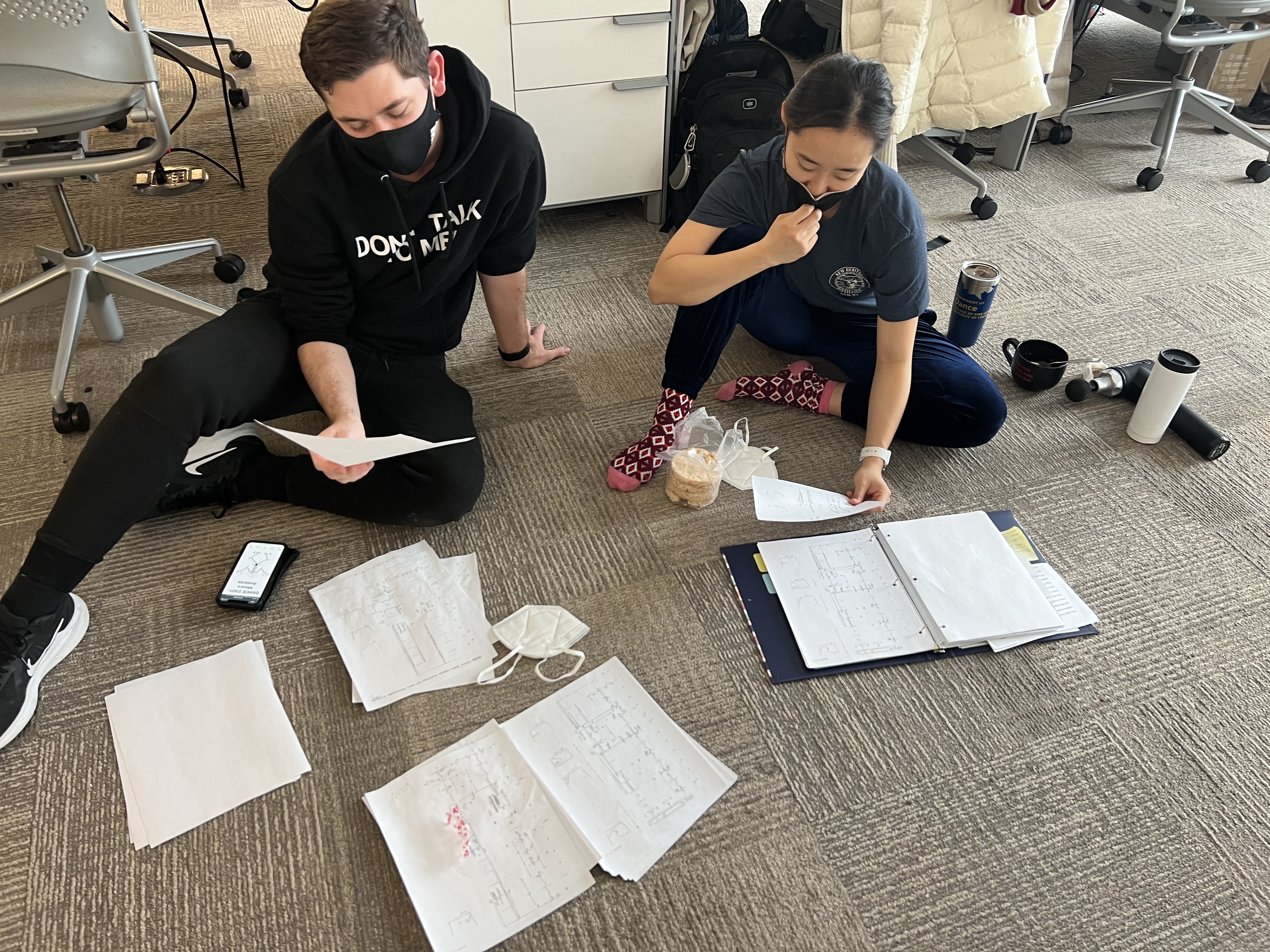
Over this spring semester, I have researched one Japanese female contemporary artist, Saeko Ichinohe. Saeko Ichinohe came to the U.S. in 1968 and since then she performed/choreographed/taught dance as a cultural exchange experience. She was inspired by Japanese culture, philosophy, poems, and literature. She was well-known for bridging Western concert dance and Nihon Buyoh (Japanese traditional dance). She passed away in 2021 though I was fortunate to access her choreography through Labanotation. I chose “Chidori” because she notated the choreography by herself in 1972. I wanted to know her movement pattern through how she notates.

I asked for help with reading scores from Dr. Williams and my cohort, Forrest Hershey. We met two times a week to read and move our bodies to connect with Ms.Ichinohe kinesthetically. She emphasized the location and direction of the weight. Weight drives the movement the most and clearly draws the space between two dancers. “Chidori” is a love story between a fisherman and a bird, so I imagined that she has a specific instruction to deliver this story.

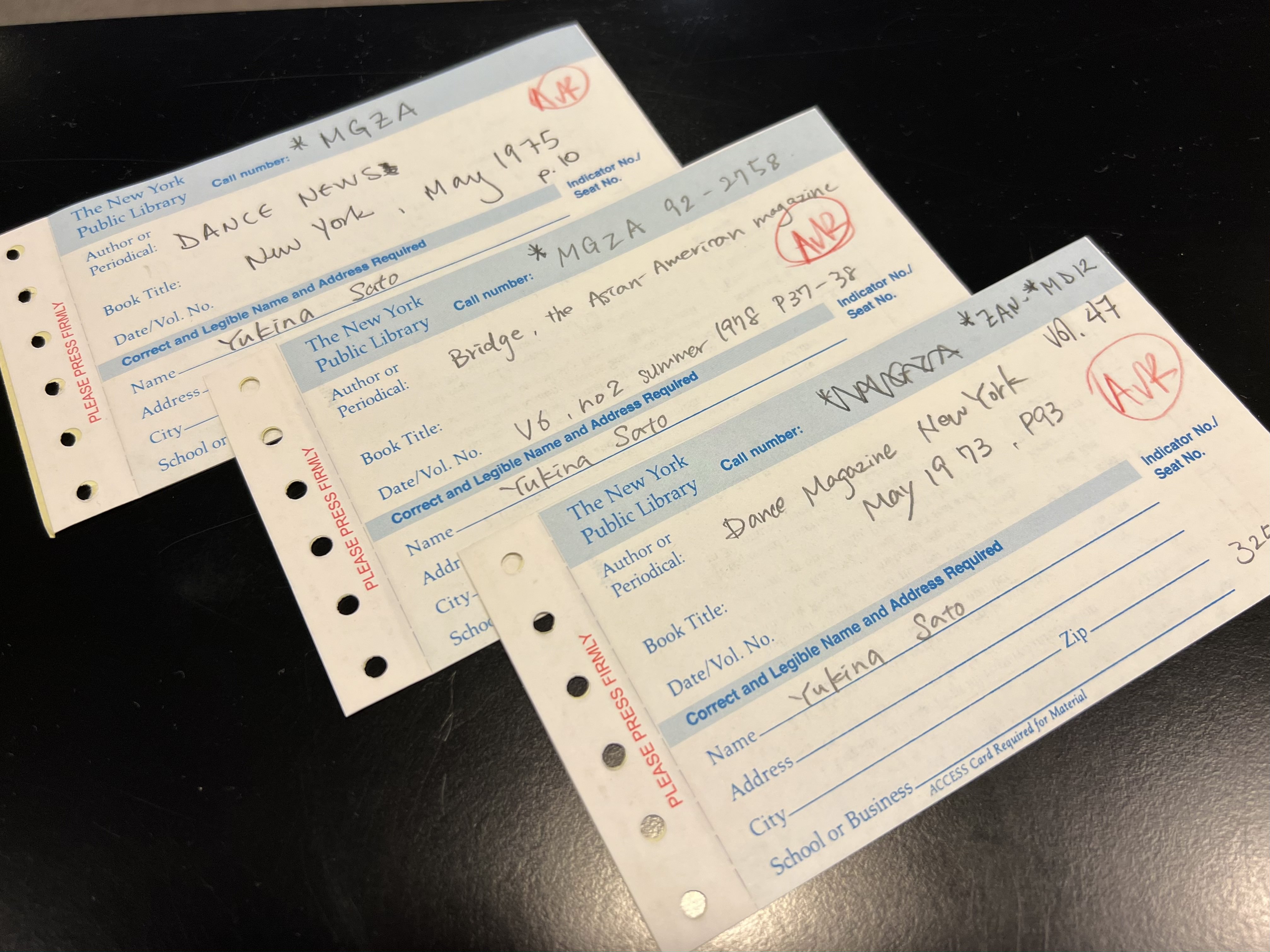
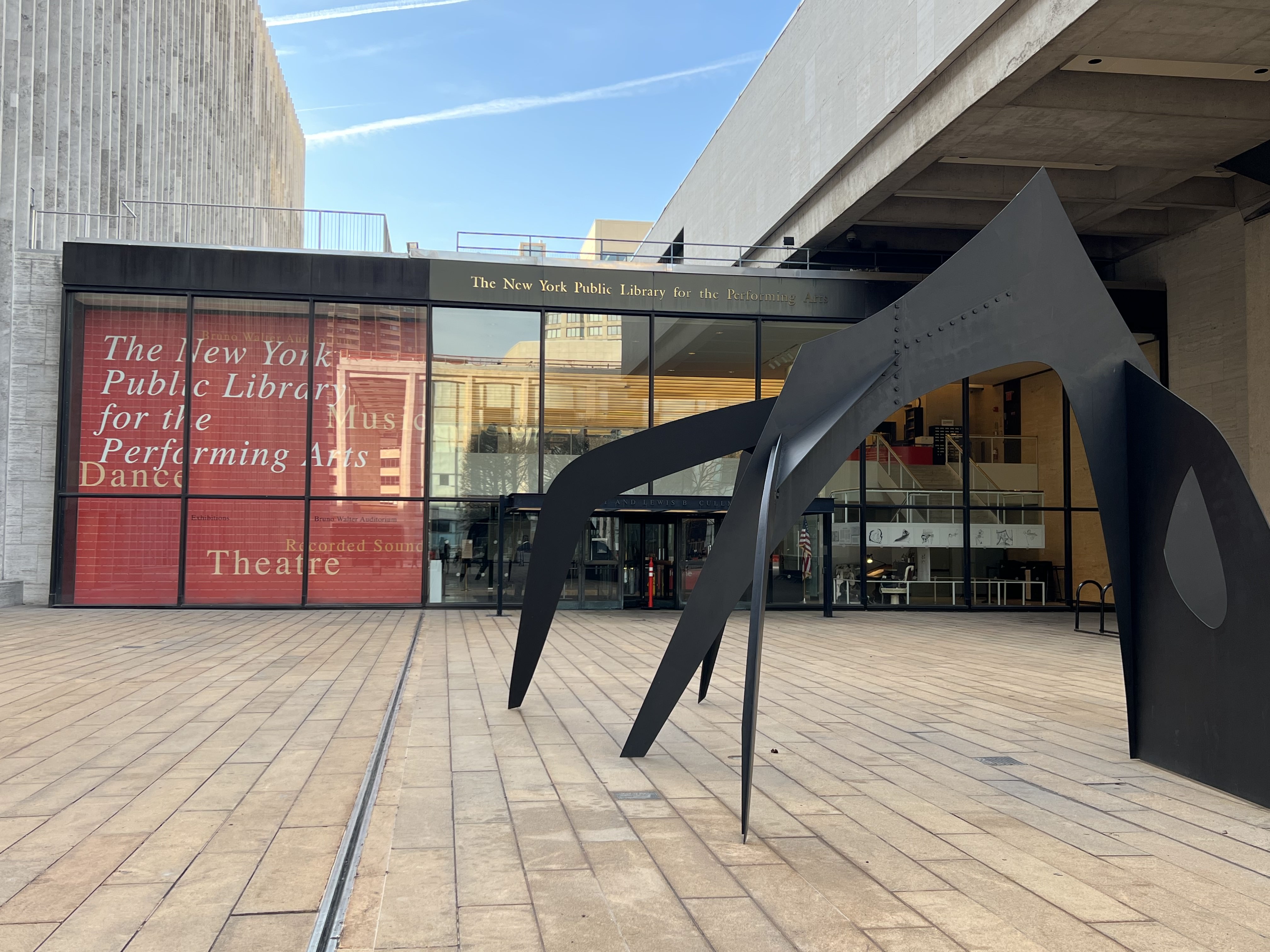
I wanted to know more about her artistic journey outside of notation score. I have researched her online yet there were only a few materials available. Then I found out that there are a couple of her personal archives are stored at New York Public Library. So, I decided to go to New York City in March to trace her footsteps. At the library, I watched many video recordings and read her artistic statements, CV, company record, and choreography notes. All the materials help me to understand her deeper than it used to be. Also, I visited all the locations she filed as her company locations and performance venues. Even though our paths did not cross, through her archives I could know her and her passion deeply. Sharing the same space where she practiced, performed, and choreographed was meaningful to me. I summarize my research journey on Saeko Ichinohe in a short documentary film.

Tracing her footsteps made me think about how I want to proceed with my career as a contemporary performing artist. Ms.Ichinohe made the most of her Japanese upbringing and integrated it with her primary dance training; ballet, and modern dance. I have a similar background in former movement practice as her. Although, I have a huge resistance to being perceived to be unique because of my cultural heritage. I was born and raised in Tokyo, Japan where I can encounter many people visit from around the world. And since I came to the United States in 2016, I have absorbed multiple cultures into my body. However, I cannot get rid of the labels such as “female”, “East Asian,” and “Japanese” from my body. When I stand on the stage my body speaks out louder than who I am. Therefore, dancing serves me how to free myself from the labels. How I can challenge my audience to see my authenticity that is coded in the movements that I create. This question was the start of my solo practice.

The research journey concluded on 4/16 performance “Transcendence -時を超えて-” with amazing collaborators, Columbus Koto Ensemble/ Forrest Hershey/ Yujie Chen. I also have huge thanks to Dr. Williams, the Institute of Japanese Studies, and the Center for Ethnic Studies to make this performance happen.

What’s next?

My Dance Film Journey

Dance film

< 22 shots > 

It was a great practice for understanding the camera operation. The all angles are capturing exact the same movements yet, since I shot Ishy outside at the South Oval, I also noticed that how much lighting affected to the shots. Especially I enjoyed the editing aspect to create the whole choreography with only 2 movements. The limitation gave me a power of making something really pleasing. I had a clear understanding of the goal of this assignment and I felt succesful making 22 shots.  

< Art Project> 

This practice I really enjoyed it and I could say the film was successful to display my intention. The idea of 2D image into 3D creation is really captivating to me. The image I chose was black and white photograph taken by Ansel Adams, but it also connected to my childhood memories. So, the image itself was still, no movement inspiration whatsoever, yet I had the words, nostalgia and tracing to my home is in my mind to create the film. I chose Katie O’Loughlin as a performer since she is amazing mover as well as bold to try new thing with me. In editing, I noticed that I tend to overuse the layers, though in this film, it really worked well to tell the doubles or past self in the frame.   

<Final: Fish out of the water> 

My initial plan was to portrait my personal experience as an outsider from own culture. I wanted to keep the term “Fish out of the water” as a metaphor. Yet, I had a challenging time finding the performer who can display the struggle within their own heritage and now. So, I changed my direction to go along with the term, “fish out of the water” and created the narrative with Jackie that she had a daydream at the aquarium AKA fish shop. In this film, I used all elements that I learned in this class such as angles, musicality, key frames to make smooth transitions. The thing I regret is the dancing part. I had Jackie against the wall with the projection, and I shot her with many angles in different level. However, it turned out the lines of the wall creates the frame inside the frame. The film itself was successful to the audience to have a clear storyline as well as I could use all the skills I learned in this class.   

<Reflection of the semester> 

Dance Film I is one of the class I was excited to take in this semester. I was ready to dive in this class. At first, it was challenging due to all instruction and class time was online. I have only used iMovie so learning all the function that DaVinci Resolve have took time and many practices and fails. Although the speed of the class and video recordings helped me a lot to catch up. I watched couple times to fully understand the editing software. In terms of filming, I enjoyed a lot to find more perspectives by applying the angles, levels, the physical distance with the objects. I only used front view to record my dance work, but to allow myself to have cinematic approach, I saw more possibilities in film. Overall, I gain a confidence to say I have a fundamental knowledge of making film.

What does it sound to you? -Japanese project-

Choreography Workshop

Over the quarantine, I have started teaching Japanese online. And it was so interesting that while I am teaching the language, I relearned how to speak my mother tongue and realized the significance of the language. This experience inspired me to corporate my mother tongue and dance.

So I have a concept in my mind that “what if the dancers heard their own story in a foreign language, what movement comes out?.” It was on Friday, after the Choreography Workshop, walking the aisle with John Cartwright, Ishmael Konney, and Quianna Simpson. I asked them if they were interested in working with my concept. Fortunately, they said YES! So we started meeting on Thursday afternoon to rehearse.

At first, I asked all of them to write a paragraph of their self-introduction. I translated the texts into Japanese and recorded them. Dancers danced with their own biography, which they could guess what I was talking about, yet it was hard for them to fully understand. Quianna shared that she recognized some words such as”African dance” but she was influenced mostly by the rhythm of speaking. Also, John mentioned that it was dancing in between familiar from and unfamiliar. Next step, I asked them to dance with other’s bio which they have no clue what I was talking about. Ishmael shared that he was inspired by the speed of my speaking and almost echoing with his body. Dancers were definitely hard to react to speaking voice with unknown topics since no connection nor inspiration to their movement. What they react was the sound, rhythm, tone, speed I made. It was a great discovery to me since I was seeking an authentic reaction from dancers to the foreign language.

So we ended up using their biography with my speaking to generate the basic phrase. In the first version of this project, I was a narrator and started speaking Quianna’s story, then John’s and Ishmael’s at the end. The person who was spoken one’s bio leads the movement and others echoing. It was a clear structure of displaying how dancers embody the sound of Japanese.

Although, we received feedback about I and dancers’ relationship as well as an objective of this project. We discussed one more time to clarified the intention of this project and landed on offering a foreign experience to the audience but also showing the visceral level of communication. Also, we decided to not separating me from their narrative. I added on my story to move together as well as bringing back idea, authentic reaction; dancers react to what I spoke without knowing the content. We revised the movements, and space usage as well.

Over this process, we re-defined the fundamental of communication by using verbal and non-verbal tools able to understand, interact, respond to each other. Once Quianna shared that we seemed like creating harmony by bodies, which was a beautiful way to describe our creative journey and indeed it was a deep and interesting process. I would like to continue experimenting to combine my mother tongue in my work.