In April 2025, I was fortunate to be selected to present my work as part of the Candy Box Dance Festival at the Southern Theater.
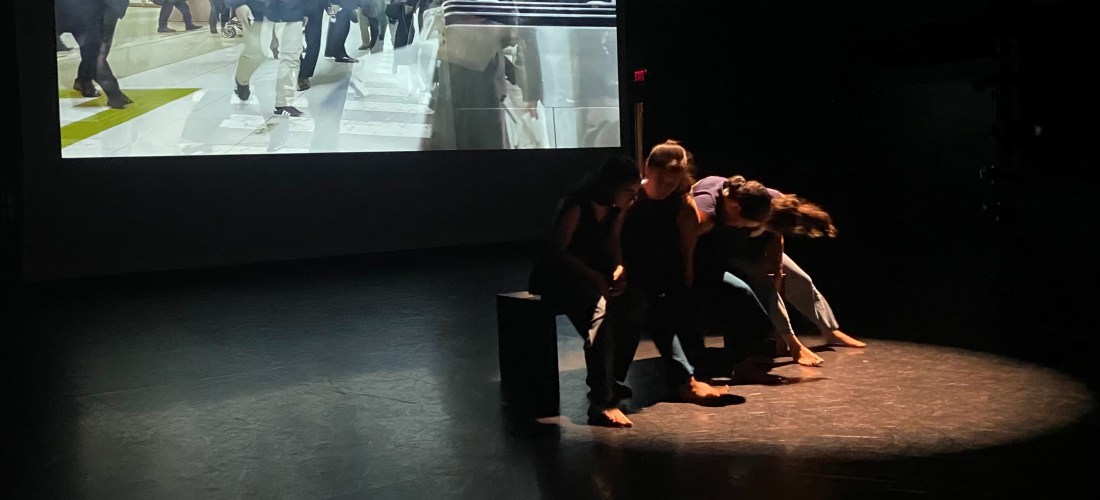
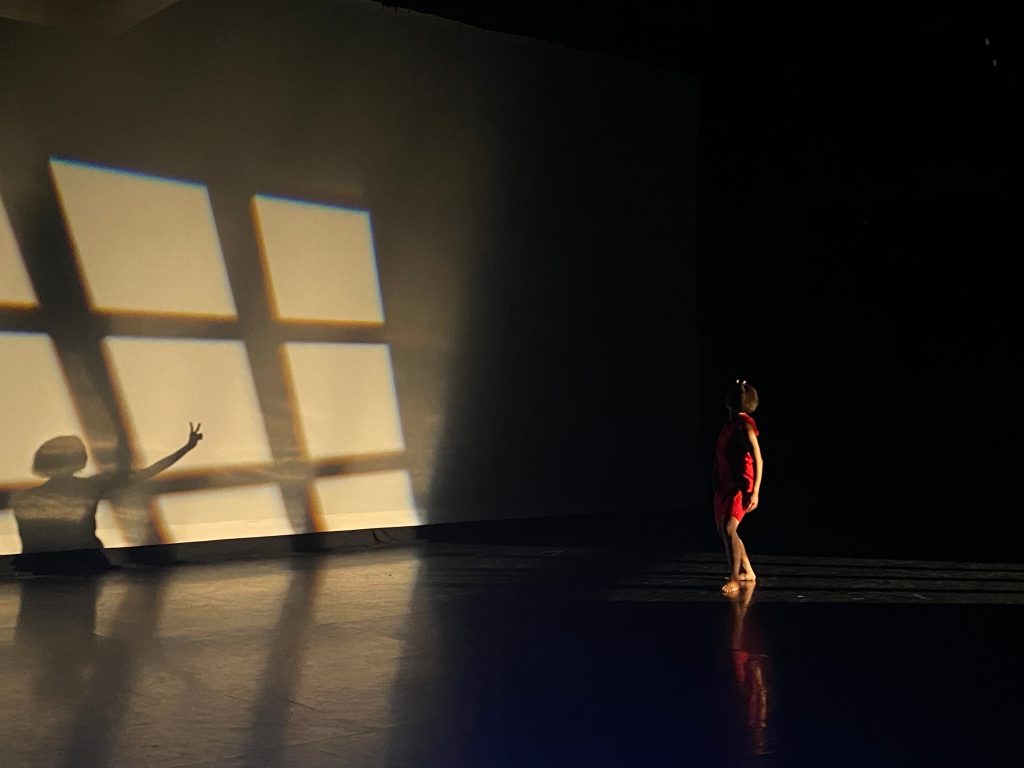
I Was There to Be Here reflects on the passage of time since leaving our hometowns and the ongoing search for “home.” Drawing from all the places I’ve called “home,” from Tokyo to Minneapolis, I explore how memory shapes identity. It’s a moving dialogue between my past self and present self, weaving belonging into the body I inhabit today.
The piece was inspired by my experience returning home in 2023—the first time since COVID-19 began. The hometown I once lived in, and even the language I used to speak every day, suddenly felt foreign. That moment of estrangement made me think deeply about the passage of time. I revisited childhood photographs and the physical habits shaped by each place I’ve lived. These memories surfaced as textures in the movement—small gestures, fragments of soundscape, postural tendencies, and rhythms I had unconsciously carried with me. The process became an excavation of how the body archives time, revealing what I’ve held onto and what I’ve outgrown.
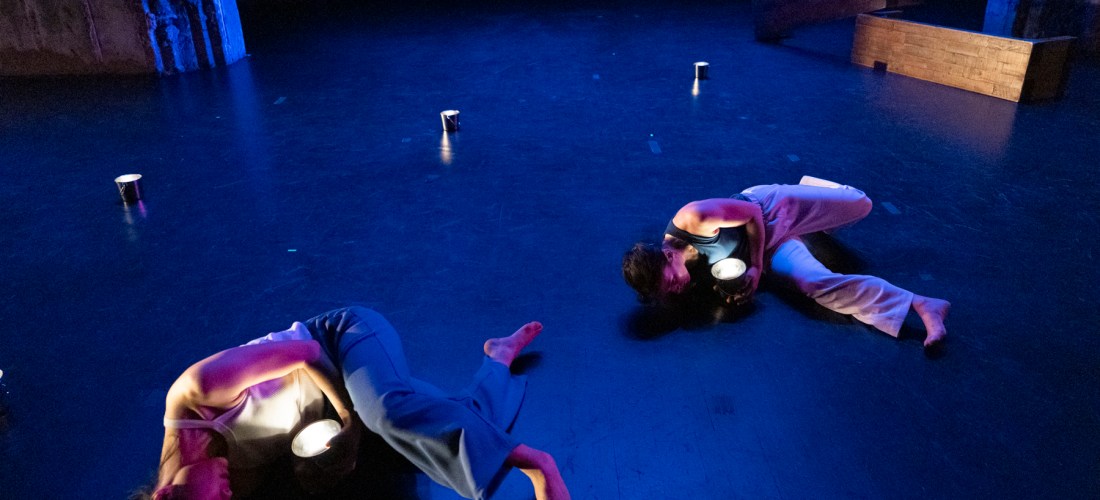
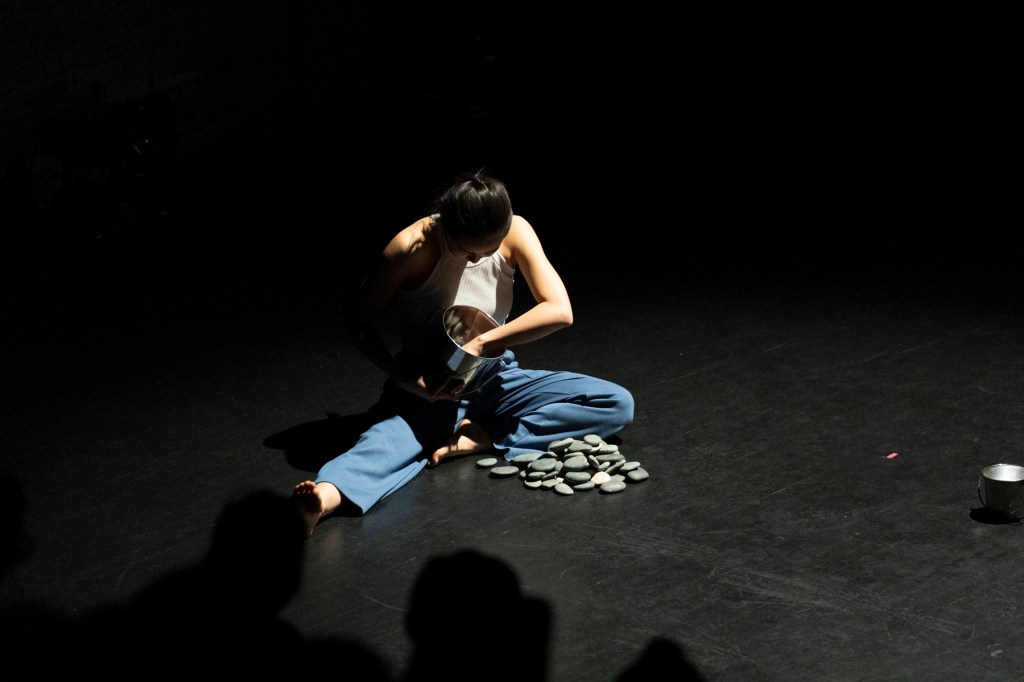
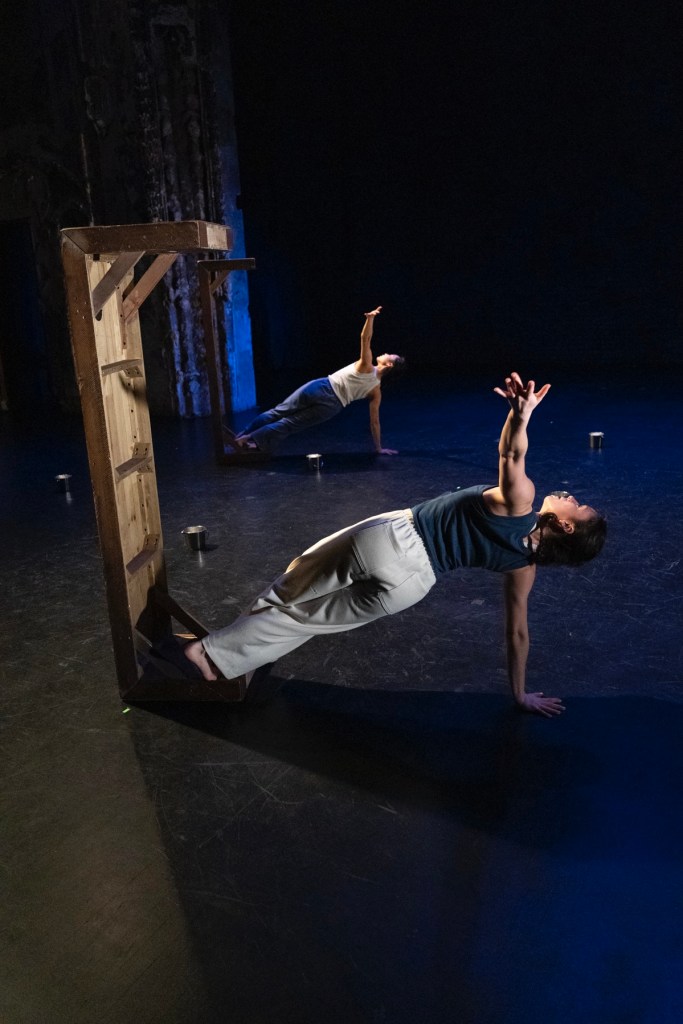
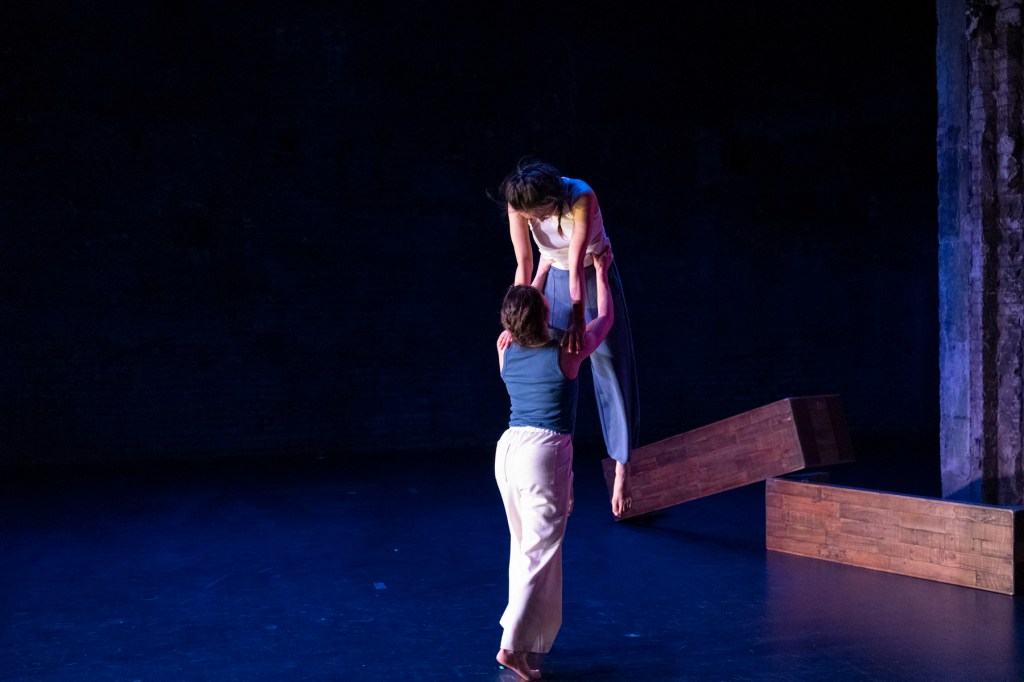
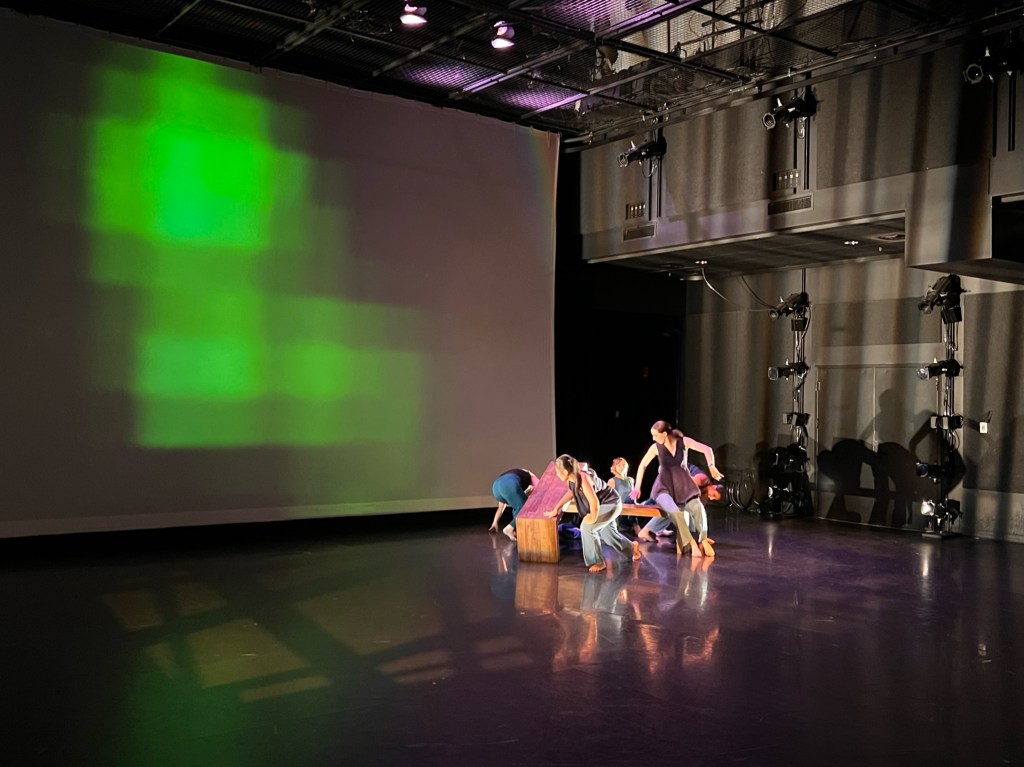
In the rehearsal process, my duet partner, Rachel Holmes, and I spent time discussing memories, our relationships with the past, and how those histories mirror who we are in the present. We talked about how time grows out of the past while continually shifting and moving forward. We brought various props into the studio to visualize imagined conversations between our present and past selves. The two benches became a door, a bridge, and a landmark of life. The piles of rocks and eight buckets with internal lights represented the emotional temperature and texture of different memories. We treated the studio as a site of remembering, and these practices allowed us to build a movement language that felt intimate, porous, and always in conversation with change.
Presenting I Was There to Be Here within Candy Box gave me space to explore the concept more fully and allowed the piece to keep evolving. This felt true to the theme of “home” as something fluid rather than fixed. I was surprised by how many people had different interpretations of our relationship—seeing Rachel and me as friends, sisters, or reflections of one another—and yet how many resonated with the larger journey of seeking. I realized the work was not only about my own story but also about the universal feeling of being shaped by the places and people we move through.
This project is part of my ongoing investigation into cultural hybridity and the body as a living archive. I Was There to Be Here continues to push me to ask deeper questions about how we carry history, displacement, and belonging within our bones, and how movement can reveal what words cannot.
It has been a while since I present my thesis project. However, I would like to reflect before I move on to the next stage of my life. My thesis project, “we carry to depart” was premiered in February 2023 at Barnett Theater at the Ohio State University. The creative process took me almost a year and a half to complete. The journey felt really long but super short at the same time.
My research interests started from a simple question, “How do we define ourselves?” There is a past that shaped us that reflects who we are yet it will not define who we are. For example, I grew up in Tokyo, Japan. The fact that I was born and lived there constitutes how I see the world in a certain way. However, it does not mean that it 100% defines a current me, who studied dance in the U.S. for 7 years and has absorbed various cultures. It is part of who I am.
As a dance artist, during this whole three years of the MFA program, I was in the endeavor of looking for “who truly I am” and what is my “authentic” artistic voice that represents Yukina Sato. I came to the graduate program straight from the bachelor program. It is a rare pathway for people pursuing a career as a dancer. However, this opportunity gave me a place and time to test, fail, explore, and seek what I really want to do.
The key term here is authenticity.I viewed and investigated myself from both outside and inside. From the external point of view, I questioned how I am perceived by others. What community do I belong to? How society defines people in categories, called identity. From the internal view, I asked what shaped me into who I am. Is it the people around me, the space I live in, my nationality, or my body?
Also, dance is tangible but intangible in a way. It requires the physical ability and duration of time to describe intangible things. Always battling with time and ideas. If you exist in the dance industry where so many people have tried and executed various amazing ideas and creative approaches, what you can do? What makes you absolutely unique? How you are in conversation with the past, current, and future?
The thing never changes where I go, and who I am interacted with, are my mind and body. The accumulative experience and memories are stored in the mind and they are unfolded by the body. How do we unpack this complexity of self through body movement? For me, the process of accumulating was unconscious. Therefore, it took me a long time to unfold them.
In my second year, I focused on my present self and created the practice of “body-doodling.” Every day, I took time only 1-2mins to log the location, time, and sensation. And I created a short phrase inspired by the daily record. So if you do it for 7 days, it creates 7 phrases. The practice of dailiness of making and tuning into my mind and body. One example was
Shaky legs Hugging the void Pacing fast Lost the sound of shoes Scared to go out in the lights I wasn’t full
Then I also invited 5 dancers with me to try the same exercise. My interest was to examine the various perspective on archiving themselves every day. Also, questioned how to log ourselves daily to trace the change consciously.
This practice informed me to move on to the next step. During the daily log, the most impactful part for me was where I reside in my body. If I was laying on the grass or sitting on the dining chair… where my body created very different sensations, emotions, and thoughts. It could be I would be in the space because I had to do so and so that day, however even though I did have control over my schedule, my body was affected by the “space”.
I have talked a lot about “space” in the last blog post. For my thesis project, I focused on the physical space such as a classroom, a city, and a living room in the house. Especially I deeply searched the location I grew up. In December 2022, I had a chance to be able to back to my hometown after three years since COVID-19 hit. I felt the hometown was no longer what I remembered. Everything looked, heard, and sensed new to me. I visited many places that were memorable to me and videotaped the locations. Also, I recorded many soundscapes. These files created a distinct outline of the piece.
In the last year of my MFA program, I was super fortunate to have 6 dancers with me to play and experiment together. Some dancers had been working with me for two years! They were willing to be with me ups and downs. I was immobile due to my knee surgery in Autumn 2022, so it was really difficult to know exactly what I want during the rehearsal time. I asked dancers to try many prompts and improvisations. I sometimes lost in experiments or composition, not liking what I suggest, finding interesting movements, or back to scratch. (*I don’t think not many artists don’t disclose how rough the creative process can be — Just a thought…)
The piece starts at the train station. There is a video of a train departing playing in roop in the background. A dancer, Aya Venet sits on the bench, waiting for the train. “ガタン、ゴトン…(the sound of the train moving)” Then the backdrop video infuses more video clips at the stations and crossing in Tokyo while more dancers start to walking across the stage. When all five dancers sit on tiny benches, there start pushing each other to claim their own spot on the tiny bench. Transitioning the train station to my hometown, where many waves of people walk directly to their destination. The kinetic energy of urban life was embodied by five dancers through simple walking back and forth between two benches. The synchronous sound of feet, non-stop walking back and forth, and direct and intense focus was formed by the walk.
A dancer, Yitong Chen disturbed this established system by walking across the dancers. Yitong’s movement sparks on the stage, shouting “1, 2, 3, 4!” and transferring their energy to others. All the movement was extracted from the so-called box phrase. The number 1,2,3,4 is the surfaces or directions of dancers’ orientation on the stage. And specific number is in relation to specific memories with family members. Their movement becomes bigger and travels across the stage. More spreading their range of movement and suddenly a dancer, Rani Bawa, who only keeps walking shouts the frustration, “AHHHHHHHHH!!!” The frustration comes out from being alienated from the group. This section represents how people establish the system and the reality of whether some can adopt it and or not. Her shout transitions the scene to the physical space created by two benches, representing Japan and the U.S. Dancers leap over and push and pull them, and the distance between benches gets closer and closer and makes them blend into one long bench. Then, dancers transform benches and create many different spaces such as a slider at the schoolyard, a hiking trail, a dining table in the kitchen, and lastly a small closet, where I hid many internal emotions, trauma, and thoughts.
Coming out of the closet segways to my solo. I travel across diagnose from the left corner to the right corner. Each movement represents specific life events and memories from the day I landed in Oklahoma till the current moment. When I reached the right corner, two dancers, Kara Philoon and Aya Venet enter the stage. Their duet consists of many weight shifts. They represent the relationship between mother and daughter. The mother supports the daughter but eventually, the daughter has to leave the mother and move forward without her. I incorporated my experience of recovering from a knee injury as a method of slowing myself down to reflect on my relationship with people around me and myself. The rock music start kicks in and as the duet finishing, I am blasting the energy on the stage. Throw my body out, kicks and turn, flipping my arms around… it is the internal pain and acceptance of what I become. The dancers observed me from a distance on the stage. I slow down the movement to take out the knee pads and give a piece of them to each dancer. The knee pad stands for my shed skin, a part of my body. I give a piece of myself to my dancers as members of the collective identity we created throughout the piece.
The last unison showcases my movement vocabulary which consists of influence by six dancers and what I have been trained and learned. It is a mixture of the past and the embodiment of the current self. And all dancers drifted away from the right corner to the left corner leaving me alone on the stage. They carry each other to leave me behind. The last scene cites the very beginning. I stand in the same spot that Aya was sitting down and rephrase her movement in different ways how we create the space and how I leave the past behind, how I carry forward and depart to the new chapter of my life.
This piece is the creative process and archive at the same time. I feel like it made me realize the power of dance-making and how I want to embody my vision as a member of the human race.
I have been searching for who I am as an artist. And getting into the beginning stage of my thesis, I pondered the experience of being a Japanese female contemporary artist in the United States. I have my own unique experience of how did I arrive at this point in my life. However, I was curious to hear the story of precedents.
Over this spring semester, I have researched one Japanese female contemporary artist, Saeko Ichinohe. Saeko Ichinohe came to the U.S. in 1968 and since then she performed/choreographed/taught dance as a cultural exchange experience. She was inspired by Japanese culture, philosophy, poems, and literature. She was well-known for bridging Western concert dance and Nihon Buyoh (Japanese traditional dance). She passed away in 2021 though I was fortunate to access her choreography through Labanotation. I chose “Chidori” because she notated the choreography by herself in 1972. I wanted to know her movement pattern through how she notates.
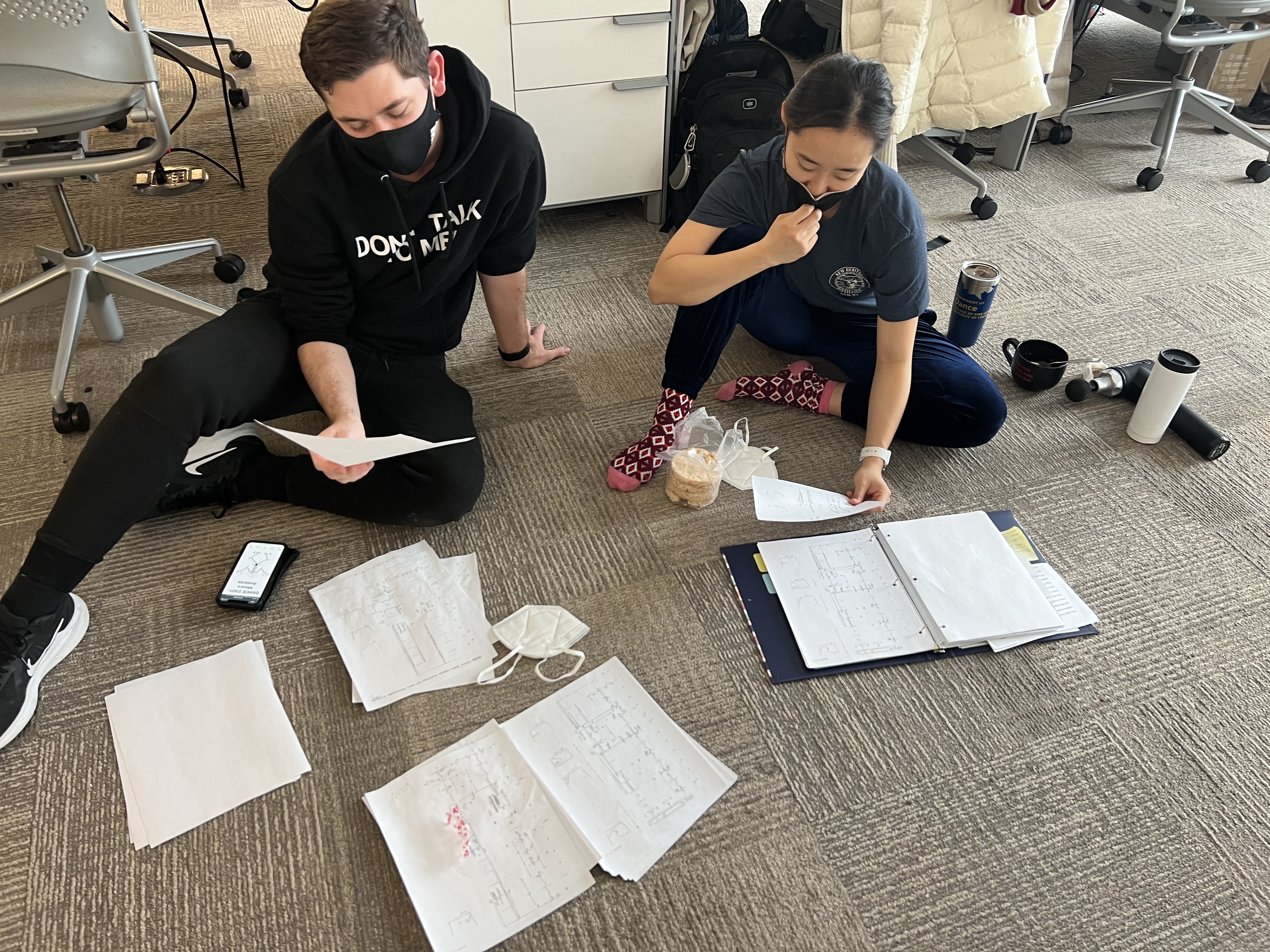
I asked for help with reading scores from Dr. Williams and my cohort, Forrest Hershey. We met two times a week to read and move our bodies to connect with Ms.Ichinohe kinesthetically. She emphasized the location and direction of the weight. Weight drives the movement the most and clearly draws the space between two dancers. “Chidori” is a love story between a fisherman and a bird, so I imagined that she has a specific instruction to deliver this story.
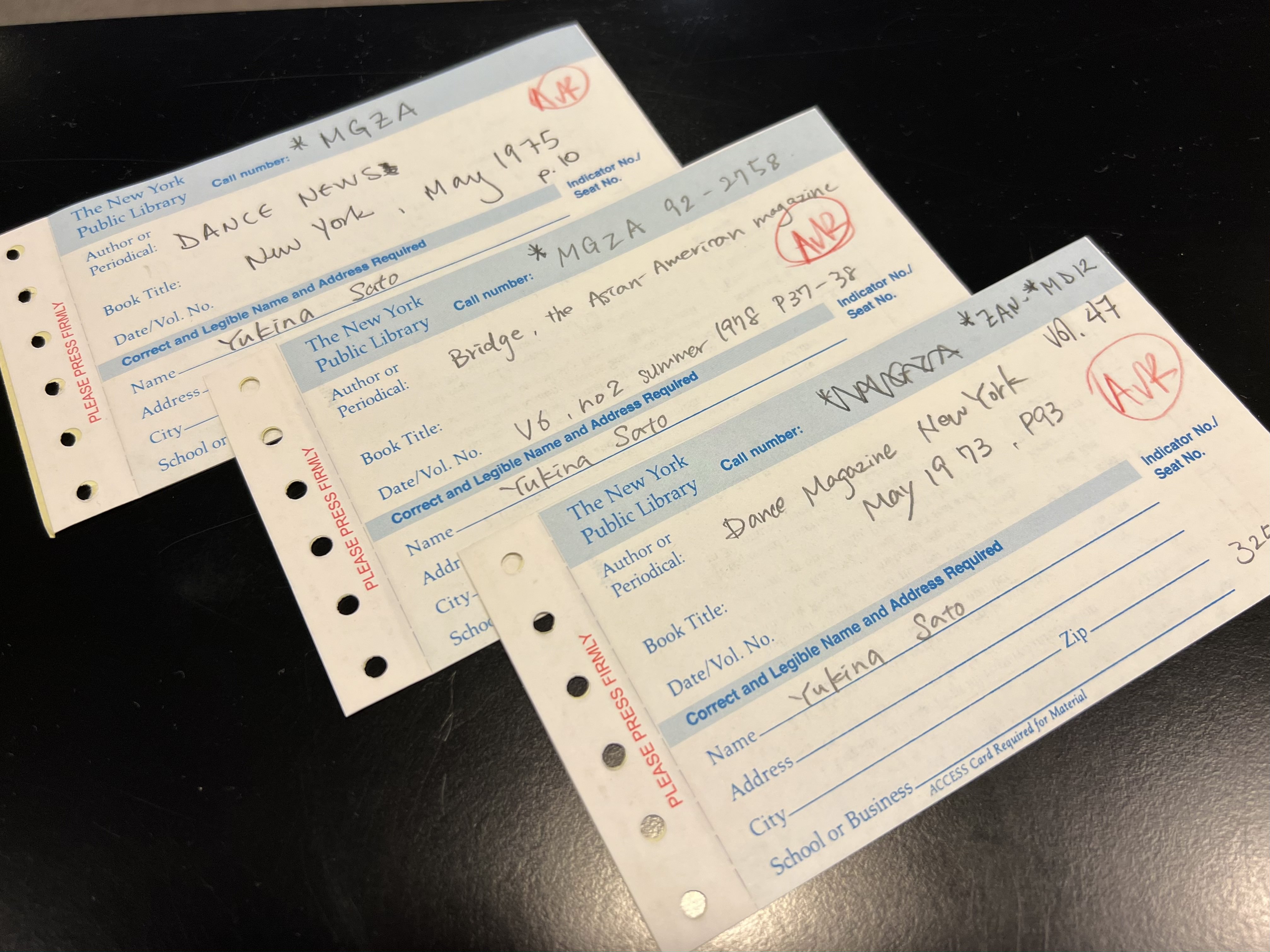
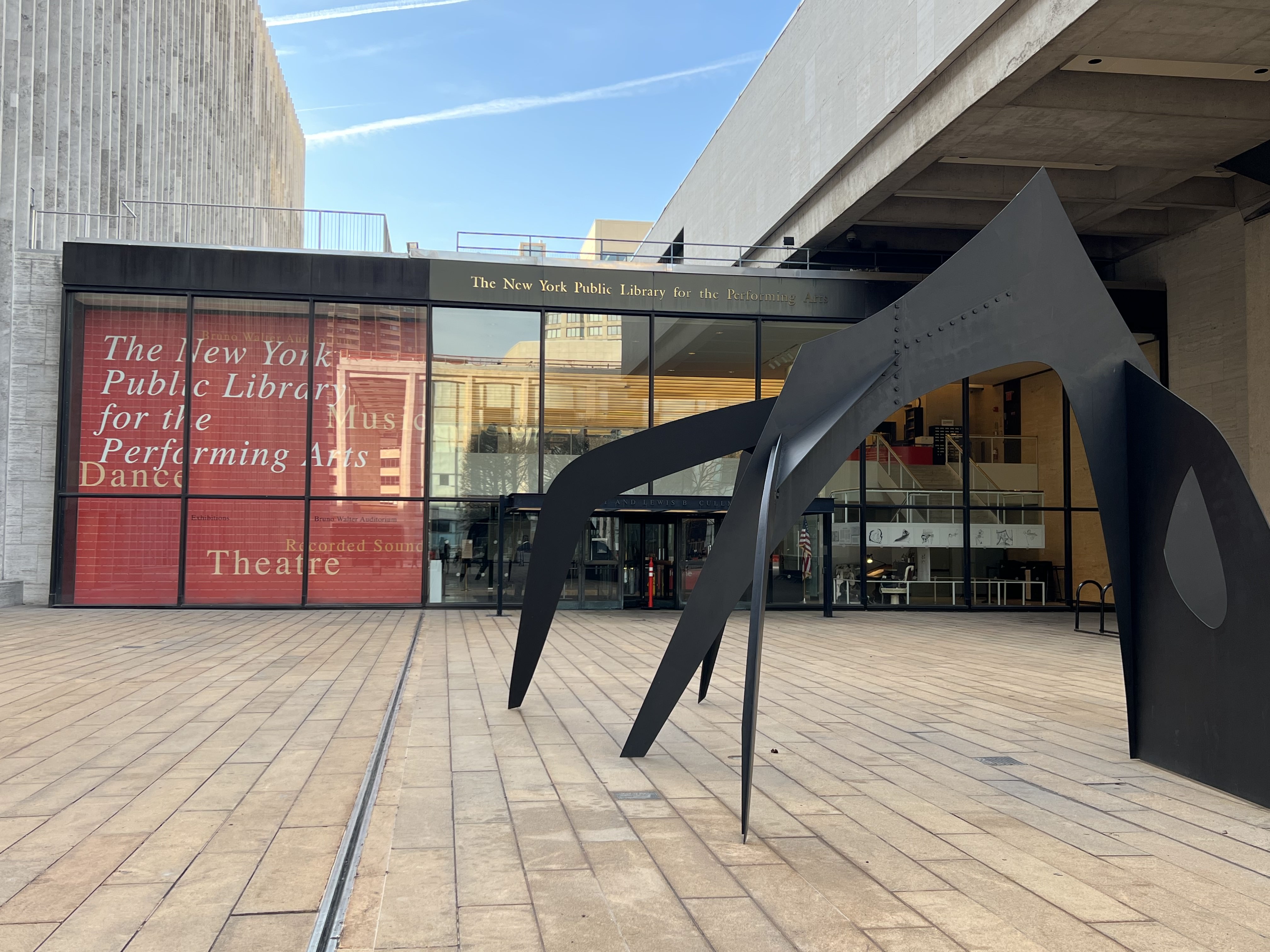
I wanted to know more about her artistic journey outside of notation score. I have researched her online yet there were only a few materials available. Then I found out that there are a couple of her personal archives are stored at New York Public Library. So, I decided to go to New York City in March to trace her footsteps. At the library, I watched many video recordings and read her artistic statements, CV, company record, and choreography notes. All the materials help me to understand her deeper than it used to be. Also, I visited all the locations she filed as her company locations and performance venues. Even though our paths did not cross, through her archives I could know her and her passion deeply. Sharing the same space where she practiced, performed, and choreographed was meaningful to me. I summarize my research journey on Saeko Ichinohe in a short documentary film.
Tracing her footsteps made me think about how I want to proceed with my career as a contemporary performing artist. Ms.Ichinohe made the most of her Japanese upbringing and integrated it with her primary dance training; ballet, and modern dance. I have a similar background in former movement practice as her. Although, I have a huge resistance to being perceived to be unique because of my cultural heritage. I was born and raised in Tokyo, Japan where I can encounter many people visit from around the world. And since I came to the United States in 2016, I have absorbed multiple cultures into my body. However, I cannot get rid of the labels such as “female”, “East Asian,” and “Japanese” from my body. When I stand on the stage my body speaks out louder than who I am. Therefore, dancing serves me how to free myself from the labels. How I can challenge my audience to see my authenticity that is coded in the movements that I create. This question was the start of my solo practice.
The research journey concluded on 4/16 performance “Transcendence -時を超えて-” with amazing collaborators, Columbus Koto Ensemble/ Forrest Hershey/ Yujie Chen. I also have huge thanks to Dr. Williams, the Institute of Japanese Studies, and the Center for Ethnic Studies to make this performance happen.
I had the privilege to be part of the thesis project with Laura Neese (3rd year MFA at OSU dance). I have been working with her since last fall, and this performance is an extension of her research.
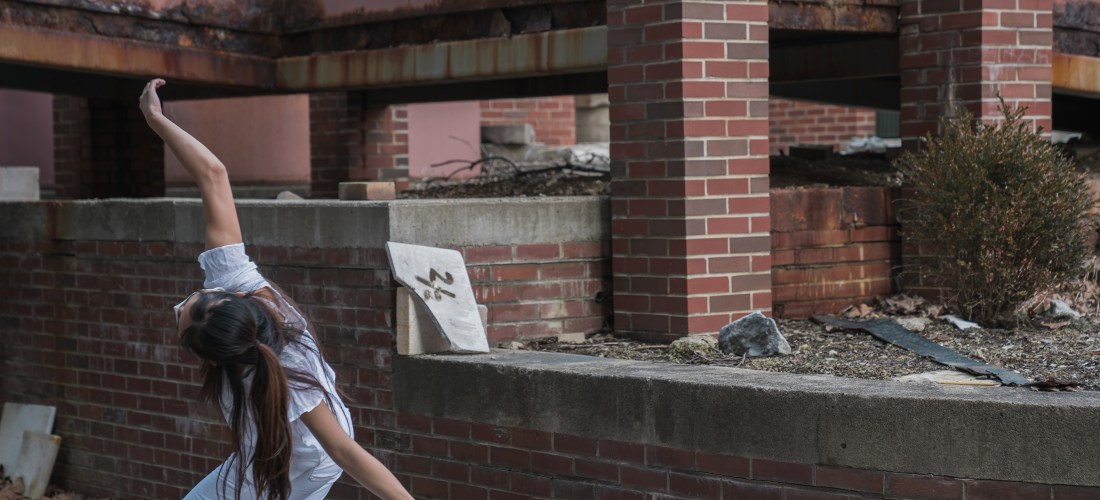
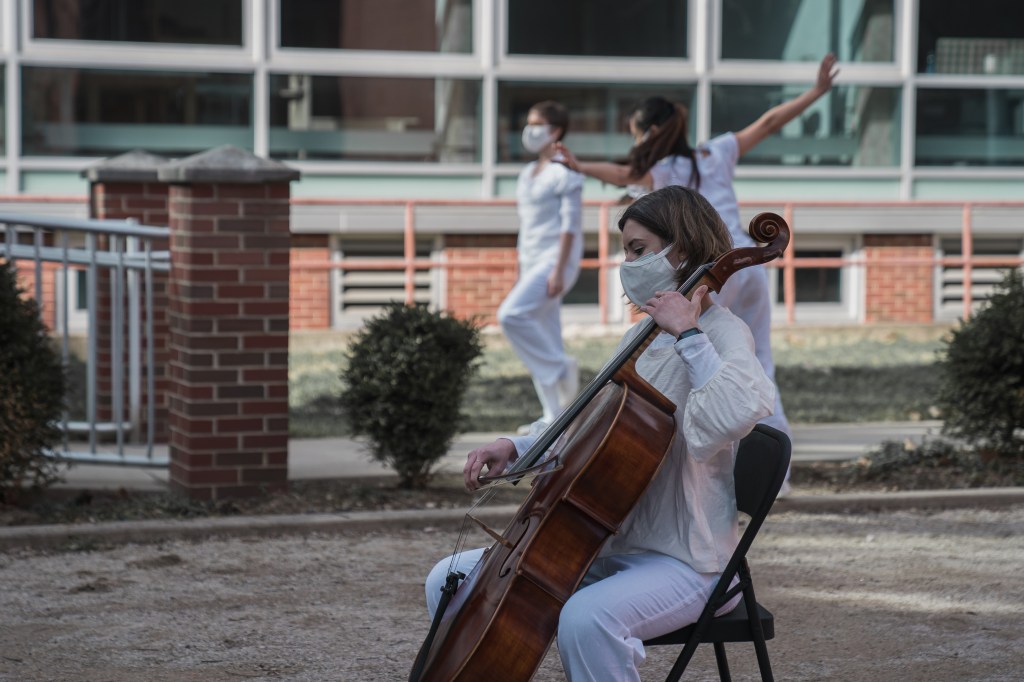
The performers were Laura Neese, Teddi Vargas (Senior at OSU dance), Michaela Neild (2nd year MFA at OSU dance), and myself. This time, Cellist, Sara Troeller, and make-up artist, Parisa Ahmadi also joined the team to elaborate the performance. We performed at the middle yard at the Hopkins Hall.
Photographed by Abby Koskinas
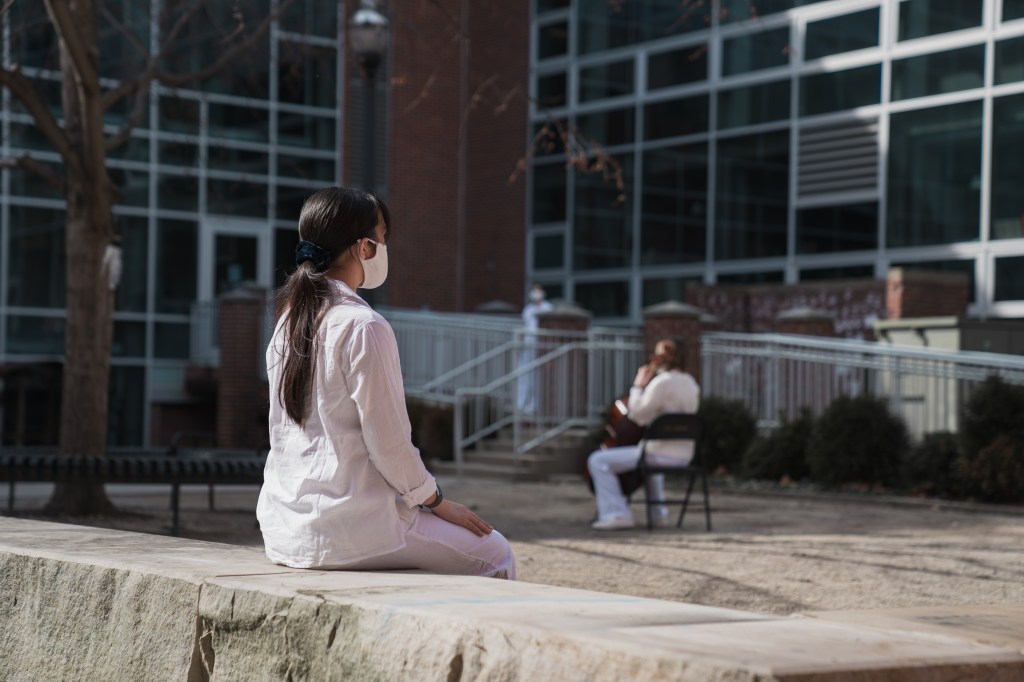
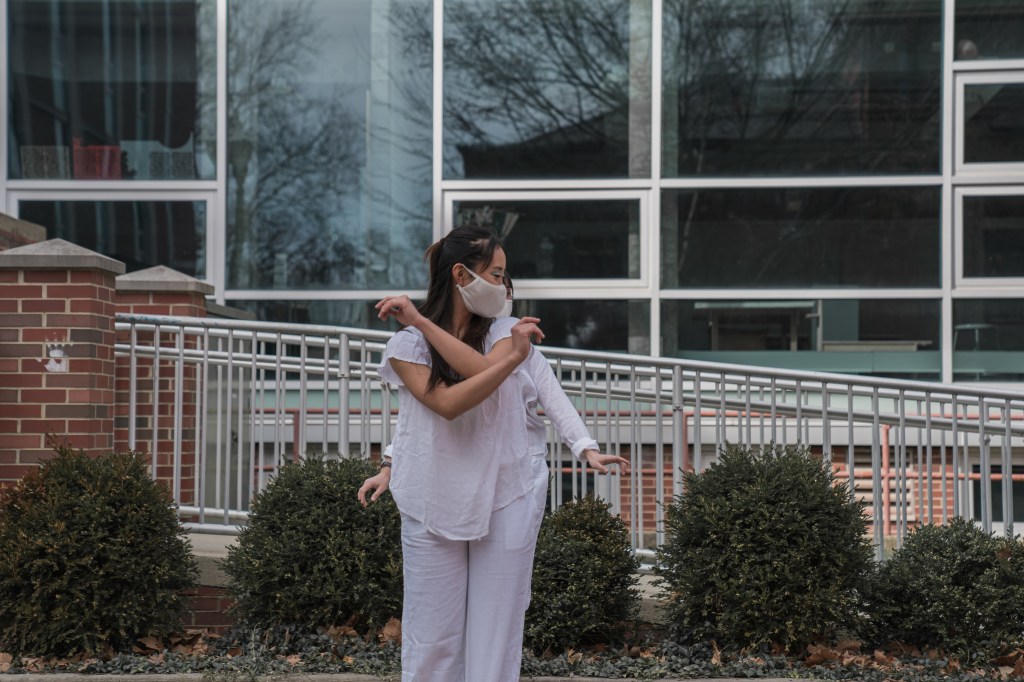
I joined them at the beginning of February when Columbus was covered with white snow. I remember the first time Laura, Teddy, and I went out to the site. The trace of the footsteps, trees standing strong and lonely, the warmth of the body under the coldness. After the exploration at the site, we created the phrase by using all the elements we witness. It was a reminder of the beautiful findings in nature even though after the snow melts.
We performed the basic phrase every time we hear the theme played by Sara. I really cherish the feeling and memory every time I dance this basic phrase. Sara’s music was adding another layer of inspiration and I loved how it weaved between 4 moving bodies and space.
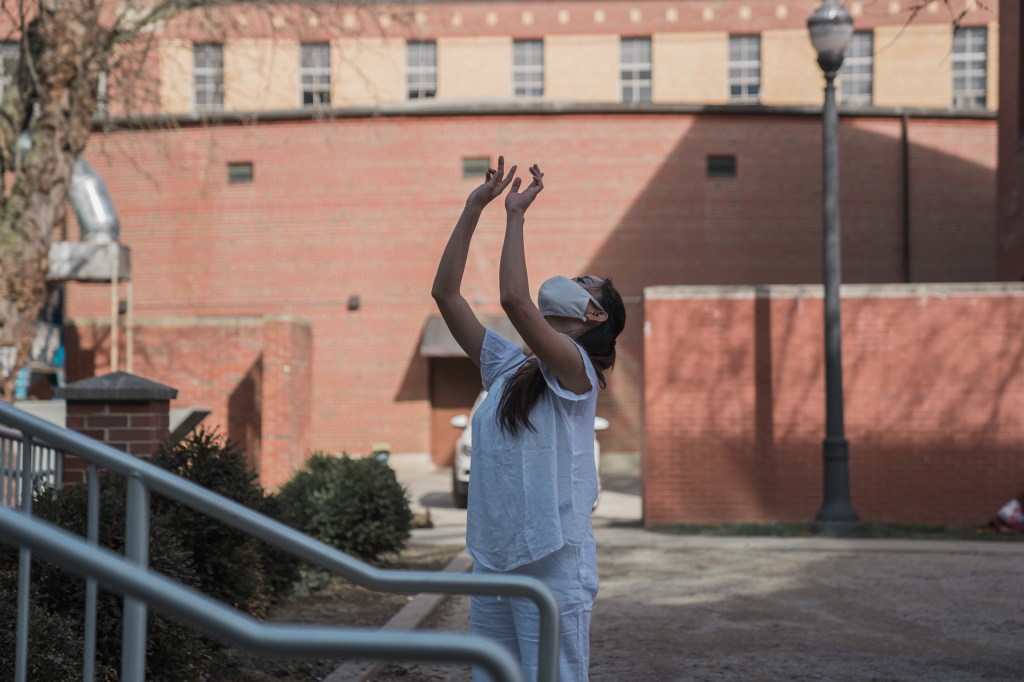
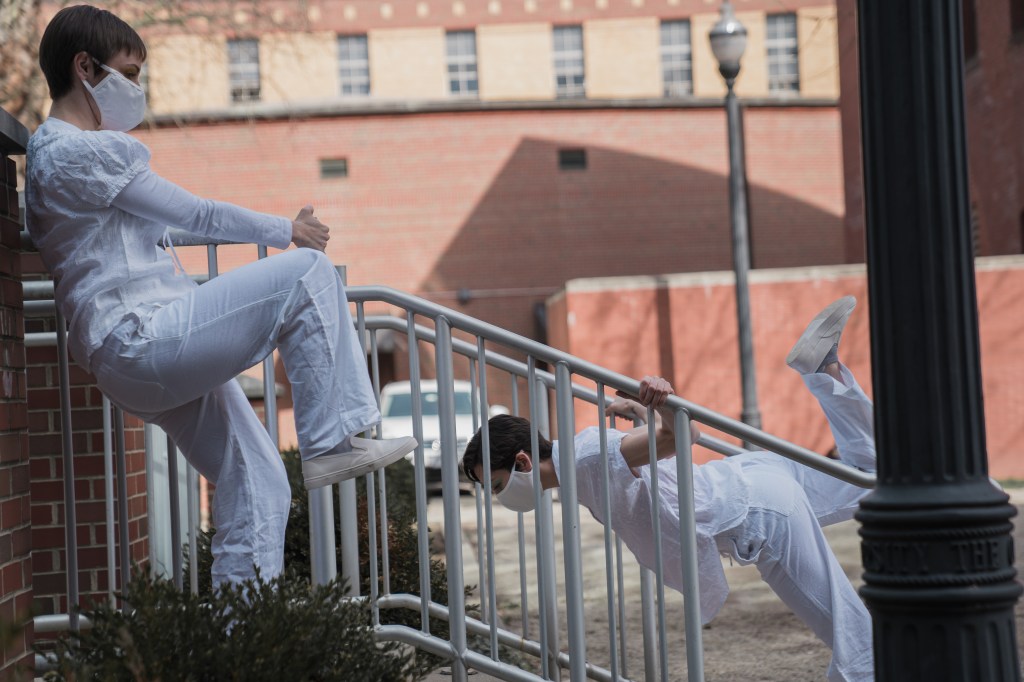
All-white costumes stood out and emphasized the contrast from the architecture surrounding us. We also had bright-colored eye make-up which made me think about the joy or celebration of the arrival of spring.
Photographed by Abby Koskinas
As for the score, we had 5 minutes of stillness and 10 minutes of improvisation, a total of 15 minutes session 4 times. (I wrote down a clear explanation below. )
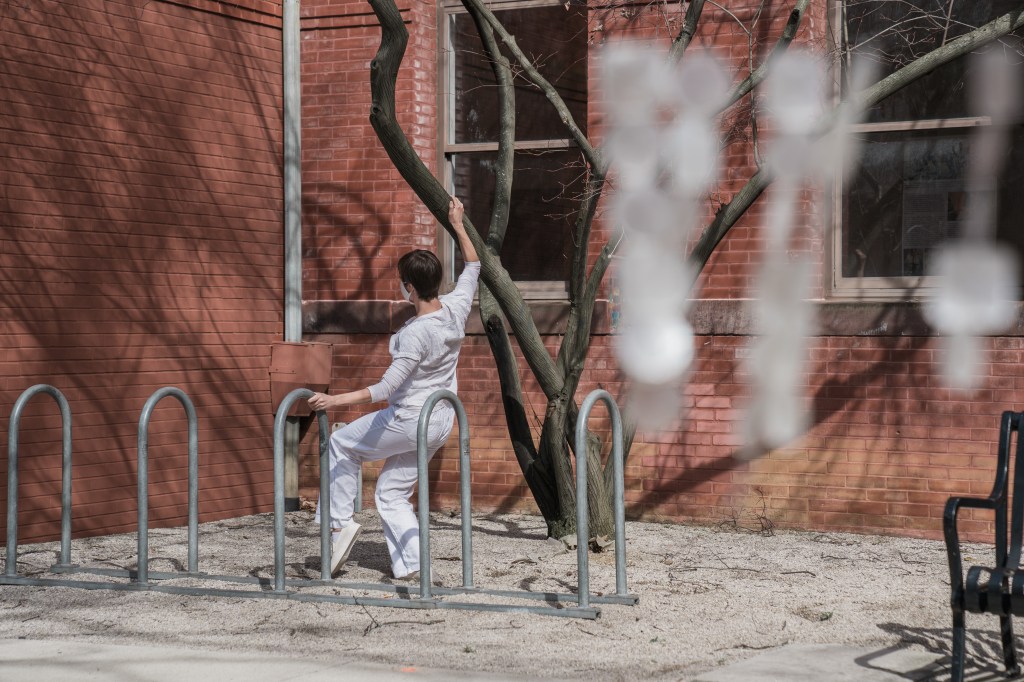
We separated the site into 4, Ramp, open space (looks like a theater), bicycle stand, grabble with chairs. And we spread out to each site for the first 15 minutes. The first solo was fully engaged with the environment. The sense of visual, touch, hearing drove my movement. The second and third were partnering. I had duets with Teddi and Michaela. Both duet sessions were always found surprise, excitement, and creativity. It also could be described as active listening, call, and response, or conversation. The last part is a finale. We all gathered at the ramp. I really enjoyed all of us get to connect and sense each other. Someone initiates and someone responds. We never knew what will happen, but our connections were strong enough to adapt, adjust, and create together. I felt the sense of community.
This process was never be forced to recreate. Laura allows us to jump into more possibility within the movement score and simply having fun move together.
<Score of the performance>
Four 15 minute cycles: 5 mins stillness/silence10 minutes movement and all begin with basic phrase.
Following with improvisation solo, interaction with environment, and interaction with each other, evolving over time
cycle 1:(theme plays) stillness
(theme plays) all start with phrase at individual sites, then explore individual impetus and interaction with site
cycle 2: (theme plays) stillness in between your sites I and II (theme plays) start with phrase -> partnerships at the sites, explore site with each other in mind
cycle 3: (theme plays) stillness between sites II and III (theme plays) start with phrase, evolve from there in new duets at your site III
cycle 4: (theme plays) stillness between sites III and the ramp (theme plays) start with phrase, explore ramp, interacting with site and groups
Last weekend, I was fortunate to be part of the performance, Tethering Iteration 1. Laura Neese, 3rd year MFA student was showcasing her thesis process and I was one of her performers. From my understanding of her research is an investigation of durational change in movements, human relationships, and the environment with an anatomical perspective.
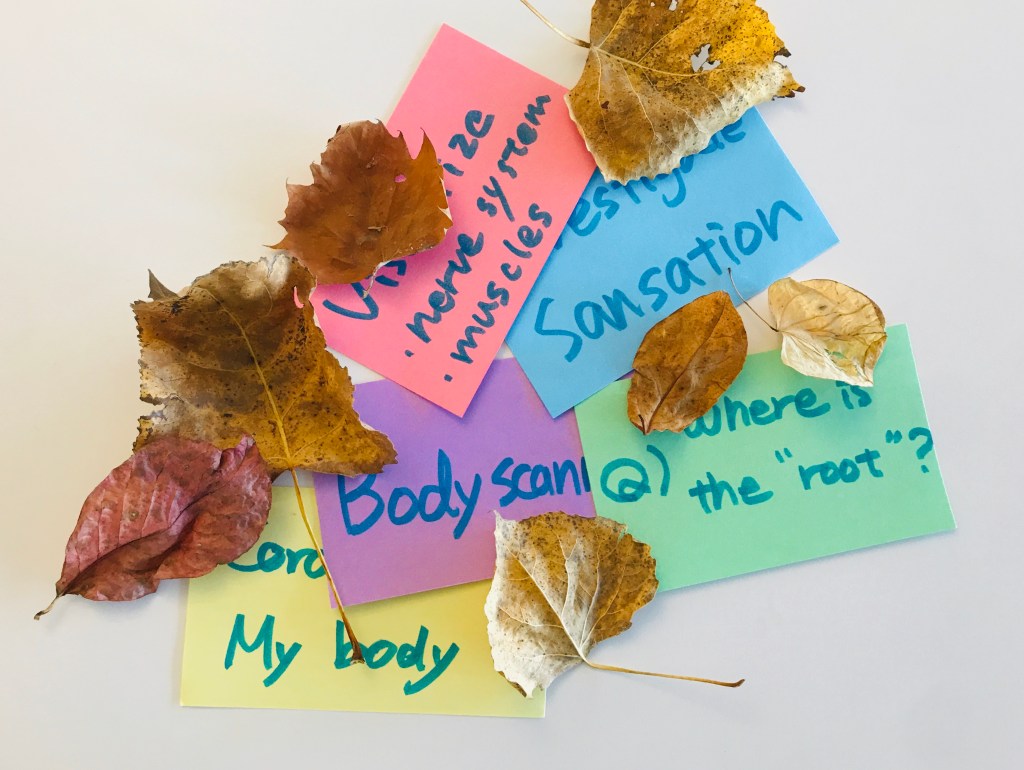
My process with her started back in early September. I met the other dancers, Tori, Teddy, and Madison through zoom for the first time. In the first session, she told her process and introduced breathing exercise, which I really loved. The exercise was to open the space in the lung to release muscle tension. It helped to breathe deeply by focusing on lobes (There are 5 lobes, 3 on the right side and 2 on the left side). We put the hand on the closest place of the lobe to feel expanding and shrinking. And just breathe a couple of minutes. Breathing is an essential part of human being, but we tend to forget how important is. Her process was, at least for me, centering my mind to the body and having a conversation with. Because I realized how much I overuse my body to live in this high-technology society.
we wrote down 5 things what we learned over the practices and kept as a reminder
After the first session, we met two days a week in person. Fridays at the studio and Sundays at the Chadwick Arboretum North. On Friday mornings, we started with solo improvisation to listen to the body. Then, she introduced couple of exercises, corporate nerve system and the body movements, the washing (improvisation game; one person keep walking as a washer and others can stop, dance, or walk with washer with their own choice.), non-associated words game, mirroring, walk or pause. All exercises were connected to research on how we move as individual but also as collectives. We improvised most of the time. In the end, we did free writing 2, 3 minutes to pin down our running thoughts and we shared. This morning ritual every Friday helped me to cope with the exhaustion of the week and translated into refreshing dance investigation. On Sundays, we started walking around the lake to ”notice” what you notice. It was a brief 15 minutes walk, but it was enough to sharpen and tune my senses to my surroundings. Every walk I encountered, saw, and heard different things such as color-changing on the leaves, people who came to fish at the lake, or the sound of cars running by the park. We created the base phrase out of our walks as collective and we used and manipulate it in the environment. Laura chose a space where on the right side of the Encore house with many trees. I have never done site-specific practice so these Sunday practices were interesting to me. Because our improvisations were never the same, it kept growing and changing. Even though we were familiar with the phrases, exercises, or the surroundings, we made choices and moved differently. What most strikes me over the practices was Lauraallowed us to change, influence, and be affected instead of clinging to recreate the beauty of making.
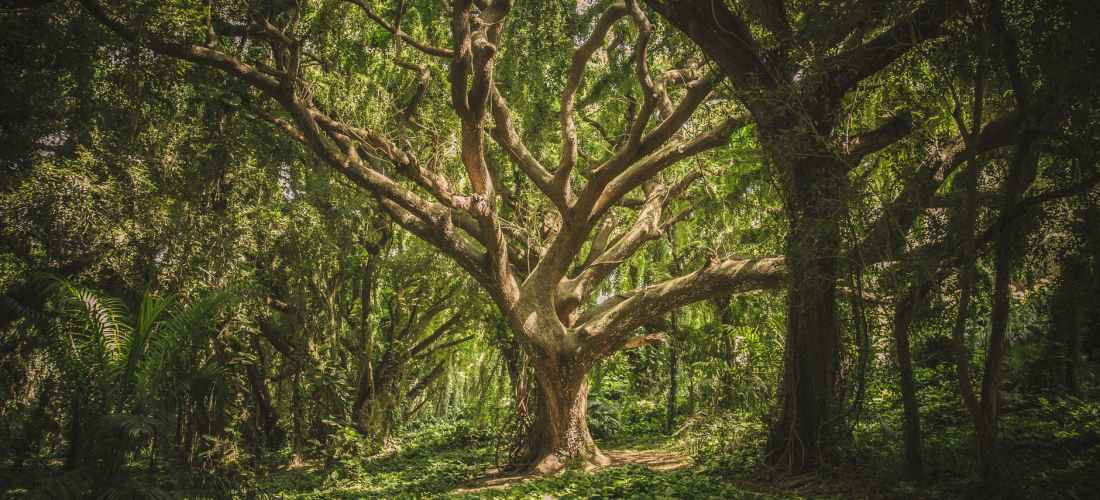
While we practicing, we as 4 dancers were paying attention to our distance due to the COVID-19. So the question was “how can we dance together or connect each other while we distanced?” This question is common among dance artists under this pandemic. However, Laura Neese solved it beautifully. As I danced more with dancers, we built trust and recognize each others’ character deeply. Gradually we understand our own movement patterns and inspiration source built the network to communicate without contacting physically. One time Laura told us that “we are building an invisible chain connection to communicate like a root of the tree or human DNA.” We all were already open-minded and ready to dive into her process, although how we built aninvisible bond over the time of practicing improvisations together were stronger and more intimate than we started.
After the show on 11/1
It was satisfying but also very sad to admit that the journey with Laura and 3 dancers was concluded, though what I experienced through the process was a gift to me. I appreciated being able to participate in her process as well as the performance opportunity.
If anybody would like to know more about Laura’s research project, please click the button below.










 Yukina Sato